
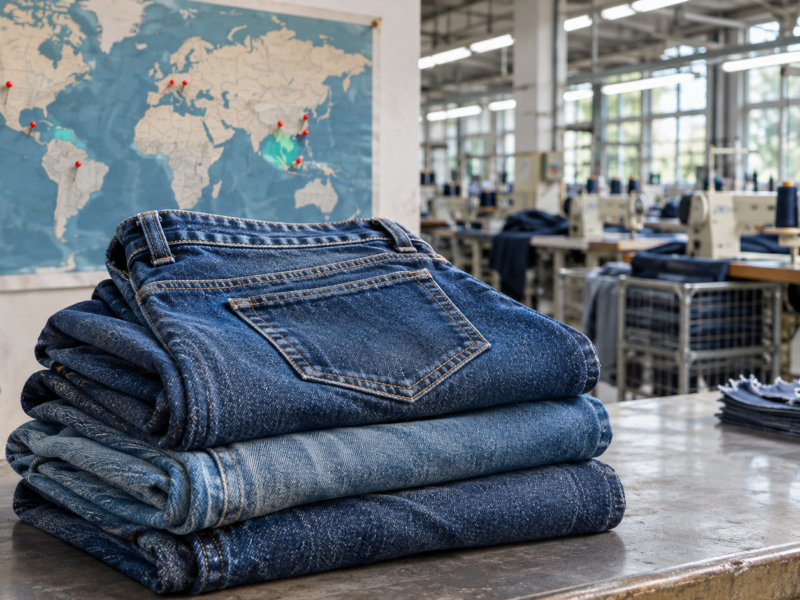
You’ve just bought a fresh pair of Levi’s. You flip over the care tag, expecting to see “Made in the USA” staring back at you. Instead, it reads Bangladesh. Or maybe Mexico. And suddenly you’re hit with that sinking feeling—wait, are these even real?
Take a breath. Seriously. This is about as normal as it gets these days. Levi’s jeans come out of a sprawling global supply chain that spans continents, and honestly, that’s been the reality for decades now. Below, I’ll walk you through exactly where your favorite jeans are being made, why some countries seem to produce better pairs than others, and what’s really going on behind that little “Made in” label.
The Short Answer: Where Are Levi’s Jeans Manufactured?
Levi Strauss & Co. doesn’t just operate in one place—they’ve built an entire global network. For 2026, the main manufacturing players include China, Bangladesh, Vietnam, Pakistan, Sri Lanka, and Mexico. That’s the short list.
The USA? Well, it used to dominate domestic denim production. Not anymore. Most standard Levi’s you’ll find on shelves today are decidedly not American-made, and finding an overseas tag is pretty much the default consumer experience at this point. The shift happened for reasons that make economic sense—global manufacturing keeps prices within reach for everyday buyers. It’s how a heritage brand like Levi’s stays alive in a brutally competitive retail market.
Levi’s Global Denim Supply Chain: Who Makes What?
Levi’s doesn’t put all its eggs in one regional basket. They spread production strategically across the globe, and each region brings something different to the table.
Asia Hubs (China, Vietnam, Bangladesh)
Asia is the undisputed heavyweight champion of global denim production. These factories offer massive scale, mature washing techniques, and cost-effectiveness that’s hard to beat anywhere else.
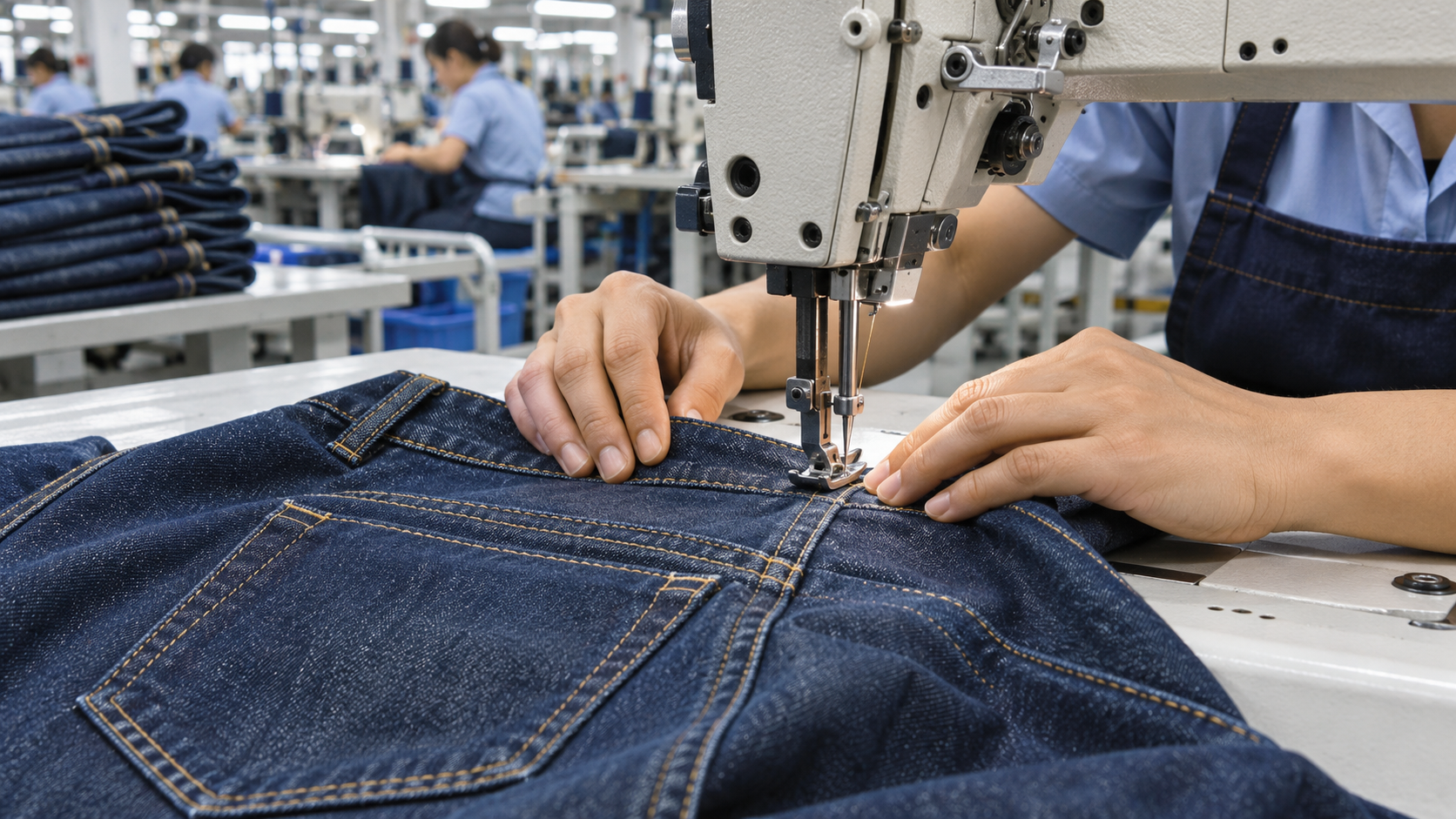
Take Kaiping Lianwang Garment Co., LTD, for example—a Chinese denim manufacturer based in Jiangmen, Guangdong province. This place is a beast. We’re talking 7,000 square meters of floor space, over 330 pieces of garment equipment, and more than 150 workers handling everything from the manual department to sample development to full production lines. Their annual output? Over 600,000 pieces. That’s not a small operation—that’s a well-oiled machine.
But here’s what I find genuinely refreshing: these Asian hubs are investing heavily in sustainability. Kaiping Lianwang, for instance, has implemented energy-saving lighting and boiler steam exhaust recovery systems. It’s not just greenwashing either—these projects reflect a real commitment to low-carbon responsibility. The factory also runs 10+ production lines with a 15+ person R&D team, which means quality stays reliable for international buyers.
The Americas (Mexico & Latin America)
Mexico plays a strategic role that often gets overlooked. The proximity to the US market is a huge advantage—Mexican factories can restock sold-out fits in New York faster than you can say “supply chain disruption.” Cross-border land shipping costs far less than transpacific ocean freight, and nearshoring cuts down on carbon emissions from transportation. It’s a win-win, and it’s why so many standard jeans for the US market originate right there.
The Premium Line (USA & Japan)
The premium vintage lines? Completely different story. Levi’s Vintage Clothing (LVC) often uses specialized, boutique facilities. Japan, with its meticulous artisanal denim crafting, produces many top-tier premium collections. A tiny fraction of assembly still happens in the USA, but these premium locations focus on heritage rather than volume. That’s why they command much higher retail prices from hardcore denim enthusiasts who actually care about that stuff.
Does Country of Origin Affect Levi’s Quality and Sizing?
Here’s where I need to bust a persistent myth. Many consumers worry that overseas production means quality drops. That’s simply not true. Levi’s implements strictly standardized global quality standards everywhere—stitch length, hardware, metal zippers, all of it. A Mexican pair and a Vietnamese pair share the exact same DNA.
Now, sizing? That’s a different beast entirely. Sizing can feel inconsistent, and there’s a legitimate reason for that. Denim is a dynamic, organic cotton fabric. Different factories use slightly different local washing processes, which means wash shrinkage rates vary across production batches. A classic 501 from Egypt might physically shrink differently than one from Pakistan. Same fit on paper, surprisingly different feel when worn.
Professional factories minimize this variance through denim quality control checks and pre-shipment inspections. But local humidity and climate during manufacturing can subtly alter fabric behavior too. Slight sizing quirks are just the inescapable reality of mass garment manufacturing. Nothing sinister about it.
Fabric vs. Assembly: Where Does the Denim Actually Come From?
Consumers frequently misread the care tag. “Made in X” only tells you where the final assembly happened—it says nothing about where the raw cotton came from. Fabric sourcing is an entirely separate global operation; our denim supply chain guide explains how the stages connect.
That premium denim fabric might come from Japan (Kaihara denim is famously sought after), or the tough raw fabric might be woven in Turkey. Then it gets shipped overseas in bulk—maybe to Vietnam or China—for cutting and assembly. The raw fabric source determines the jeans’ texture far more than the assembly location does.
Professional overseas factories are experts at handling diverse materials. They offer comprehensive OEM services, customizing everything from washing to fabric to logo printing to packing. The assembly factory simply executes the brand’s exact specifications. That’s why an Asian-assembled pair can feature Japanese selvedge denim; learn more about selvedge denim costs.
The “Made in USA” Illusion: Are Any Levi’s Still American?
Hardcore denim purists still hunt for that elusive “Made in USA” tag. And look, I get the nostalgia. Decades ago, Levi’s relied entirely on booming American domestic manufacturing. But economic pressures forced a permanent transition to global outsourcing, and the historic Cone Mills White Oak plant in North Carolina eventually closed down. True American selvedge denim became rare and wildly expensive.
Here’s an honest fact-check: today, a modern “Made in USA” tag often means “imported fabric, assembled in the USA.” You’re paying a premium for local assembly, not authentic American-loomed fabric. Whether that’s worth it is your call. But the total globalization of commercial denim is fully complete—there’s no going back.
How to Check if Your Levi’s Are Authentic (Regardless of Origin)
Since most modern Levi’s are made globally, buyers sometimes panic that “non-US made” means fake. That assumption is completely false. Here are some practical authenticity checks:
First, examine the iconic Red Tab on the right back pocket. Second, look for the unique factory code stamped on the back of the main button—and verify it matches the printed care tag inside. Finally, inspect the rear leather patch texture. Authentic patches have crisp, high-quality, neat printing.
Professional apparel factories prioritize strict quality assurance too. Top suppliers provide relevant certificates and quality reports before shipment. Legitimate factories stand behind their craftsmanship, and if something’s defective during selling, quality suppliers will replace it. Genuine global Levi’s exhibit top-tier quality control—no matter where they were assembled.
Frequently Asked Questions (FAQ) About Levi’s Manufacturing
FAQ 1: Are Levi’s made in China actually fake?
Absolutely not. China is a massive, officially authorized manufacturing hub for Levi’s. Chinese-made Levi’s are 100% authentic.
FAQ 2: Why do my new Levi’s feel much thinner now?
Levi’s intentionally uses different fabric weights for different seasonal collections. They’ve also incorporated more elastane for modern stretch fits. Modern slim jeans feel softer and lighter than vintage rigid denim because consumer preferences have shifted toward immediate comfort over rigid durability. Heavy, stiff selvedge is now a niche product.
FAQ 3: Can I still buy genuine Selvedge Levi’s today?
Yes, but they’re usually part of the exclusive Levi’s Vintage Clothing line. The specialized fabric often comes directly from premium mills in Japan. These pairs cost significantly more because true selvedge requires slower, traditional loom weaving.
FAQ 4: How long does professional bulk denim production actually take?
It’s a complex, multi-step process. Factories develop accurate samples first—see the jeans sampling guide for the stages—sample development typically takes 10-20 days. Then bulk production begins, with production periods of 25-35 days. Bringing a fresh denim design to life takes considerable time and specialized expertise.
Conclusion: The Evolution of Levi Strauss Manufacturing
Levi’s has evolved significantly over the past century. Today, a modern pair is the true crystallization of a highly globalized supply chain. From premium Japanese fabrics to rapid Mexican assembly, every pair tells a global story. The “Made in” tag is just one small piece of the puzzle.
So, where are your favorite Levi’s made? Share your sizing experience in the comments below—I’m genuinely curious whether your Mexican pair fits differently from your Vietnamese one.
And if you’re a rising brand owner looking for a reliable denim supplier with strict global standards, we offer custom manufacturing services with rapid response times (inquiries answered within 30 minutes, quotations within 3 hours). We attend clothing exhibitions every year, offer free samples (refunded when order quantity is met), and even provide door-to-door guide service during shipment. Contact us today to elevate your premium denim brand.

Recent Comments