
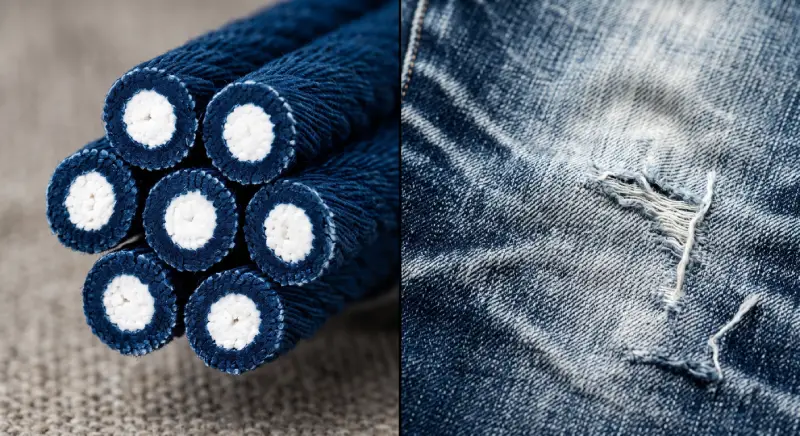
You’ve finally spent $200 or more on a pair of designer jeans, hoping they will stay pristine. A few months and a handful of washes later, you may notice the color starting to change. So, do expensive jeans fade? Yes—and the reason is rooted in how indigo dye bonds with cotton.
Premium jeans can develop more pronounced, higher-contrast fades than mass-market pairs, especially when they use rope-dyed indigo yarn and are worn before washing. Fading alone does not mean the denim is defective; uneven dye loss, excessive color transfer, or weak seams may point to a quality problem.
In this guide, we explain why indigo fades, how dyeing and fabric construction affect the result, and how to care for jeans while preserving their color for longer.
Why Indigo Denim Fades
Indigo is used mainly to color the surface of cotton yarn rather than fully penetrate its core. As the outer dye wears away through friction, flexing, and washing, the lighter yarn underneath becomes more visible. This is why blue jeans naturally lose color over time. The goal of premium denim is often a distinctive fade, not a perfectly unchanged shade.
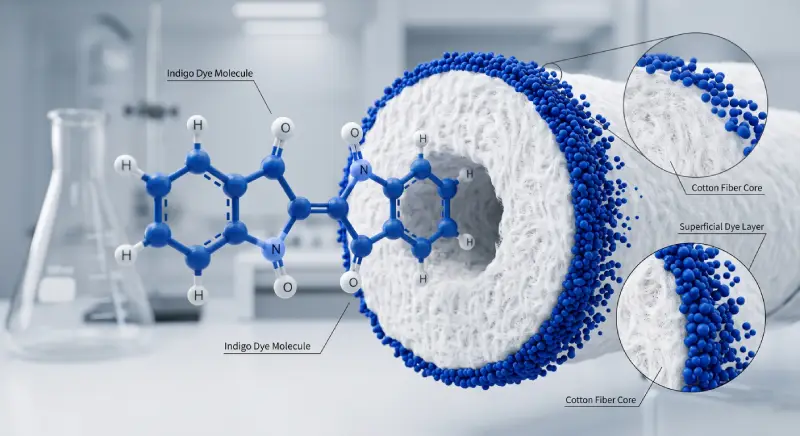
How much a pair fades depends on the yarn, dyeing method, fabric surface, wear, and wash routine. The price tag alone does not determine colorfastness or guarantee that a pair will fade attractively.
Rope Dyeing and the Denim Ring Effect
In rope dyeing, indigo-dyed yarns pass through repeated dye baths and air oxidation. The dye builds up on the yarn’s outer layers while the core can remain lighter. This ring-dyed structure helps create the high-contrast fades associated with many raw and premium denims.
As the jeans are worn, areas exposed to repeated creasing and rubbing—such as the thighs, knees, and backs of the knees—can lighten at different rates. These patterns are often called whiskers and honeycombs. For background on raw, unwashed denim and how it differs from prewashed fabric, see our guide to selvedge and raw denim.
Rope Dyeing and Sheet Dyeing
Rope dyeing processes yarn in bundles before weaving. Sheet, or slasher, dyeing processes a wide sheet of parallel yarns. Either method can produce quality denim when controlled well; the dyeing method by itself does not determine whether jeans are expensive, durable, or colorfast. Yarn construction, dye depth, finishing, and quality control all matter.
Learn more about the factors that contribute to the price of premium denim in our breakdown of why selvedge denim costs more.
How Fabric and Friction Affect Fading
Denim’s twill weave, yarn texture, and surface finish influence how friction affects its color. Rougher or more textured fabric may show stronger abrasion and transfer more surface dye, while smoother fabric may fade more gradually. The outcome also depends on fit and movement: areas that crease or rub repeatedly tend to lighten first.
| Factor | Possible effect |
| Repeated friction | Can wear away surface indigo faster in high-contact areas |
| Creasing and movement | Can create localized whiskers and honeycombs |
| Frequent or harsh washing | Can accelerate overall color loss |
| Fabric and dye quality | Affects durability and resistance to rubbing and laundering |
Why Raw Denim Develops High-Contrast Fades
Raw denim is sold without a garment wash, so the fabric has not yet been softened or faded by industrial laundering. As the wearer breaks it in, creases and high-friction areas develop at an individual pace. Some denim enthusiasts choose raw jeans for this evolving pattern; others prefer prewashed denim with a more consistent color from the start.
Premium does not always mean raw, and raw does not always mean expensive. Fabric weight, mill, construction, finishing, and brand all affect price. The fading is a characteristic of indigo denim, but whether you like the result is a matter of preference.
How to Slow Down Fading
You cannot stop indigo denim from changing forever, but you can slow color loss. Wash jeans only when needed, turn them inside out, use cold water and a mild detergent, and avoid bleach. Air-drying out of direct sunlight can also help preserve color. Always follow the care label, especially for stretch denim or special finishes.
For practical care guidance, see our article on refreshing jeans with dye. If you are developing a denim wash for a clothing line, our denim washing service covers production finishes and wash options.
FAQ: Do Expensive Jeans Fade?
Can I prevent expensive jeans from fading?
No. Indigo denim will gradually lose some color with wear and washing. Washing less often, using cold water and mild detergent, and turning jeans inside out can slow the process.
Do expensive jeans fade differently from cheaper jeans?
They can, but price alone does not determine how jeans fade. Rope-dyed yarn and unsanforized or raw fabric can create more visible, individualized fades, while prewashed jeans usually start with a more uniform appearance. Fabric, dyeing, finishing, and care all influence the result.
Why does indigo rub off on light-colored surfaces?
Some surface dye can transfer through dry or wet friction, particularly from new or raw denim. Avoid wearing a new dark pair against light upholstery until you know how much color it transfers, and follow the garment’s care instructions.
Can a manufacturer test how a denim wash will fade?
A manufacturer can develop and review fabric and wash samples before bulk production. Testing samples helps brands assess the color, hand feel, and consistency of a finish before approving a production run.
The Takeaway
Expensive jeans can fade because indigo is designed to sit largely on the surface of cotton yarn, where wear and washing gradually reveal the lighter fibers beneath. Premium denim may be engineered to produce distinctive fades, but price alone is no guarantee of colorfastness. Choose a finish you like, follow the care label, and wash gently to control how quickly the color changes.

Recent Comments