
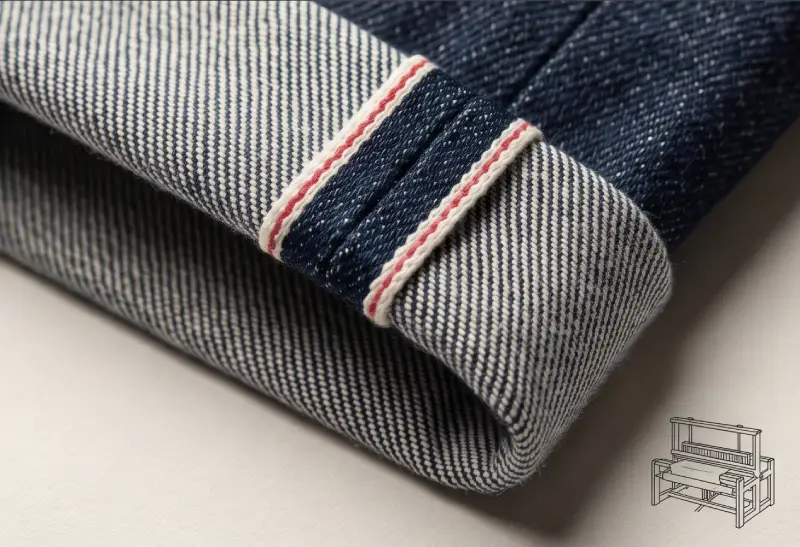
For many denim enthusiasts, it is a journey that begins and often ends with a raw pair of jeans. While they usually remember the brief thrill that follows, confusion soon scoresane fast on its heels. In the denim world, there are all kinds of terms being thrown around like “shuttle looms,” “raw vs. But most guides fail to address the practical questions that everyday buyers would really want answers to. An example is customers always worrying about shrinkage. In addition, they ask if heavy fabrics will be akin to wearing cardboard.
That is why today, this ultimate guide will explain all you should know about selvedge denim. We will examine its extensive history, technical makeup and real-world sizing. And in conclusion, we will give you a crystal-clear framework to help you choose the right pair for your daily closet.
What Makes Selvedge Denim So Desirable? (The Hidden Value)
Without slow fashion to support selvedge, you have to dig into the manufacturing process to realize why people are willing to pay so dearly for it. Selvedge translates to selvedge—true fact: it is a truncation of “self-edge.” This is the raw edge of the fabric, which does not unravel.
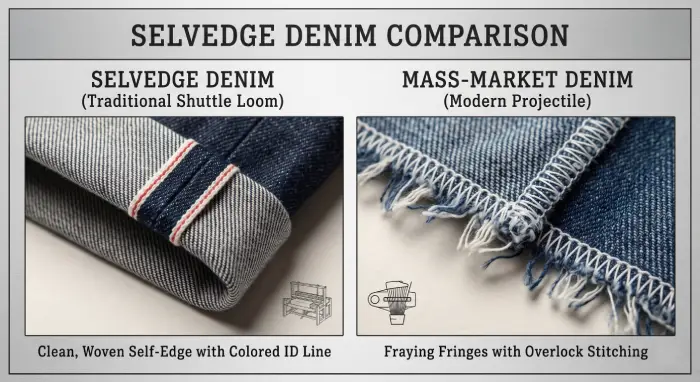
The Science of a Self-Finished Edge vs Conventional Denim Top to Bottom
Standard jeans cuffs typically display bold, synthetic overlock stitching when you flip them up. It is employed in designs because manufactured denim is cut from very large portions of fabric, which often leaves badly severed, worn edges that have to be stitched together or else when washed, they can potentially perish.
Selvedge denim, on the other hand, uses the natural edge of the fabric strip. The fabric is tightly finished during weaving so that it does not fray apart. This allows for a beautiful, clean and highly durable seam that can last decades.
Conventional shuttle looms with the newest mass-production machines
This unique feel of the selvedge denim is a direct product of traditional manufacturing processes. Old-school shuttle looms like the legendary Japanese Toyoda G3 continuously weave fabric using a wooden shuttle that zips back and forth between the ends of the loom.
- Fabric Width: While shuttle looms are used traditionally for fabric weaving, the narrow strips enabled are only 31 inches wide at any time. In contrast, today’s projectile looms open wide sheets of 60 inches or more.
- Possible reason: Production speed high-Frequency looms run comparatively five times faster than the second-hand vintage collection
- Lack of Texture and Character: Modern machines manufacture raw stock material with perfect uniformity and smoothness, devoid of character. On the flip side, vintage shuttle looms have small fluctuations in tension. Deliberately, this variation gives rise to a thick, value-rich surface; in textile terms, called a “slubby” or “hairy” texture. A character that modern computer-controlled factories cannot achieve.
The story of the Selvedge ID line? (Redline, Pink, and Gold)
At the edge, if you look closely, there is a colored stripe running on that seam—this is called a Selvedge ID. This practice started in the early 1900s when the iconic Cone Mills factory produced colored threads so that major labels could easily recognize their individual orders at the textile storage facility.
Though many people know that Levi’s made the classic redline stitch. Implements this today on premium Japanese brands to highlight their unique brand performance:
- The image of Momotaro uses a bright pink ID line to symbolize the peach in Japanese mythology.
- Samurai Jeans frequently embroils an eye-catching silver or gold metallic thread into the edge to represent the deadly knife of a samurai sword.
Selvage vs. Raw Denim: What’s the Difference?
In the fashion world, one common misconception is that the terms “selvedge” and “raw” are used interchangeably. But they have very different interpretations.
Production Method:
Segment | Weaving Technology | Edge Finish |
Premium | Selvedge | Woven Self-Edge |
Mass-Market | Projectile | Overlocked / Serged edge |
Washing Process:
Condition | Industry Term | Fabric Characteristics |
Unwashed | “Raw” Denim | Stiff, inflexible, deep in color; fades uniquely over time. |
Pre-Washed | “Sanforized” | Soft, comfortable from day one, and pre-shrunk to fit. |
Related: The Evolution Of Selvedge Denim; Can Washed Selvedge Exist?
The short answer is yes. Selvedge is a term specifically for the way in which the fabric of denim has been woven, i.e., only if it was made on a traditional shuttle loom. When we say “raw” denim, we’re referring specifically to the finishing process: this means that there has been no factory post-weaving washing or distressing done at all.
Which means you can readily buy a heavy-weathered pair of jeans from top-quality selvage material that a manufacturer has weathered, washed, faded or softened up for you. Big global players in the retail world, such as Uniqlo and small American brands like Todd Shelton, are starting to sell pre-wash selvedge jeans on a regular basis. They retain the look of the woven edge classic real but with no stiff, rigid break-in of raw fabric.
Japanese denim mills (Kaihara & Okayama craftsmanship)
With the closure of the legendary American Cone Mills White Oak plant, Japan became the uncontested high-end denim capital of the world. The likes of Kojima in Okayama prefecture, known around the world for preserving older looms and perfecting ancient indigo dyeing techniques.
Japanese mills like Kaihara Denim marry time-honored craftsmanship with modern production standards. Supplying the finest denim to luxury fashion houses and independents around the globe. They are keeping the art of shuttle weaving alive, relevant and in high demand in today’s market.
The Ultimate Fit and Sizing Guide: Coping with the Shrinkage
The most common fear among online shoppers of luxury jeans is that they’ll buy the wrong size after wearing them for the 1st time. If you don’t know how your fabric was treated back at the mill, it would be very easy for you to destroy your investment in a piece of clothing.
Sanforized vs. Unsanforized: Shrinkage Measurement
When we buy premium jeans, we find ourselves choosing between two main types of them:
| Fabric Treatment | Typical Shrinkage Rate | Waist Impact | Length Impact | Sizing Recommendation |
|---|---|---|---|---|
| Sanforized | Less than 1% | Negligible change | Loses less than 0.5 inches | Buy your true, actual size. |
| Unsanforized | 8% to 10% total | Shrinks 1 to 2 inches | Shrinks 2 to 3 inches | Please choose 1 or 2 size Up normally. |
Pro Tip: This type of denim is frequently described as shrink to fit. Explaining the significance of unsanforized denim jackets, I said that if you buy your actual size in an unsanforized model, then when they get wet for the first time, those jeans will cling to your flesh with a touch-parsimonious and unyielding rubber glove-like grip.
Free Shipping Over $99 – How To Wash Selvedge Jeans Without Ruining The Fades
When you throw your jeans away in a standard washing machine cycle, what is the need to be idealized? Instead, you can use this tried-and-tested manual soaking technique:
- Option 1 — A Warm Bath: Take a bathtub or a larger basin, and fill it with lukewarm water.
- Add Mild Detergent: Add a small amount of mild, color-safe liquid detergent or denim-specific wash.
- Step 1: The Method — Submerge Inside Out: Turn your jeans fully inside out to preserve the outer surface indigo. If they float, weigh them down with plastic bottles and lay them flat in the water.
- Soak Patiently: Allow the jeans to soak undisturbed for 30–45 minutes.
- Spray Well: Rinse it with some cold and clean water to get rid of any soap and additional residue.
- Lay Flat to Dry: Carefully roll the jeans in a clean towel to absorb extra water. Allow them to dry fully by hanging them upright. The moment you throw premium denim into a mechanical dryer, because the heat is so high, it will warp and shrink the cotton fibers unevenly and ruin the shape.
Weight Guide: Which Ounces (Oz) Fit Your Daily Life?
Denim weight is typically calculated in ounces per square yard of fabric. The selection of the right weight shifts how you will wear your pants more than anything.
Light (11 oz — 12 Oz) for Summer Trousers & Stretch That Feels Good
Ideal for those living in warmer climates or beginner sewists. Brands such as KATO have successfully altered this category by bringing 4-way stretch selvedge denim into the mix. Delivering a lightweight, flexible comfort that combines classic shuttle-loomed character. Also, these jeans can be worn with less than no break-in period, so they’re great for lounging around the office or in a work-from-home setup.
Medium Weight (13 Oz – 15 Oz) For The Old-School Crunchy Sensation
This range would be denim heaven. It’s heavy enough to offer that good old structure, yet soft enough to be worn throughout any season. Mid-weight denim creates great, natural-looking fading over time and does not hurt your hands during the first few weeks of wear.
Heavyweight (16 Oz — 21+ Oz) for Hardcore Denim-Heads
Heavyweight denim is for the true aficionados. Places like Iron Heart make jeans so stiff and heavy that they actually could stand up on their own in the middle of your floor when new.
- THE TRUTH: They can be SO uncomfortable for the first month of wearing them. They even cause mild chaffing behind your knees or around your waist. They also retain body heat, making them reflect the comfort of your own personal sauna on hot summer days.
- THE REWARD: The exceedingly thick comal fabric causes very deep, sharp creases. This creates stunning high-contrast fade patterns with thick “honeycombs” in the back of the knees and crisp “whiskers” across the lap.
The Modern Way to Cuff Selvedge & Wear It Today
You can enjoy the highest quality selvedge denim without dressing as a mid-century laborer anymore. This robust fabric has successfully connected the past to modern wardrobes > in minimalist, modern silhouettes.
The Right Cut: Vintage Straight and Other Timeless Cuts
Heritage brick and mortar brands tend to be high waist, wide, straight-leg. These cuts are historically accurate, but they can also appear a bit bulky or dated on most modern body types.
The good news is that most brands today have a Slim Tapered or Athletic Fit cut! These newer designs add space in the thighs for everyday comfort but still taper cleanly from the knee down to the ankle. The angle of the ankle bib directs focus to the footwear, while still showing off that clean selvedge line without adding extra bulk.
(Puffy, Baggy) (Clean, Well-Fitted)
Single Roll, Double Roll or Summer Cuff: The Art of the Cuff
When you wear selvedge jeans, your pants almost always have to be cuffed so as to showcase that signature inner woven ID line. Discover the three most common styles for cuffing:
- The Single Roll: Just a 1-inch tidy hide. This is an excellent look for clean styling with leather boots or minimalist dress shoes.
- Double Roll: Twice folding the hem so that no part of the bottom line chain stitch is showing at all. Its aesthetic cleanly trims long pants and looks killer with low-top canvas sneakers.
- The Summer Cuff: A more relaxed, casual double fold that maxes out high on your calf. With loafers or boat shoes, this is a great option for an easy, warm-weather approach.
Case study : The commercial manufacturing company
Discovering behind the scenes of contemporary textile production is a fantastic way to gain insight into how luxurious denim gets made these days.
Kaiping Lianwang Garment Co., LTD is an example of how mass production plants infuse quality control and modern efficiency, working hand in hand on a large scale. As a denim clothing manufacturer professional, Jiangmen in Guangdong province is a denim accessories company producing various types of jeans for men, women and children exported to Europe, the United States, etc.
The company operates from a sizeable factory of ~7,000 m2 and has over 10 housed production lines with more than 330 specialized garment machines. Such an elaborate setup helps their workforce of over 150 skilled workers sustain an annual production higher than 600,000 units.
An asset central to the operation is their 15+ person professional R&D team, supported by more than 20 years of manufacturing experience. It offers dedicated OEM and ODM services that enable retail brands to tailor specific design elements (which include custom fabric selection, specialized washes, customized printing of their logo, and custom packaging).
Customer Inquiry Received ➔ Bulk Production & Quality Inspection
The process is methodical, displaying the value of factory experience in shortening developing times, such as producing bespoke sample patterns in 13 days. Modern apparel manufacturers design their production systems to be sustainable so that they can bring together large-scale capability with high levels of inspection before shipment, making sure that premium jeans are produced in accordance with international standards whilst minimizing energy use.
Frequently Asked Questions (FAQ)
How often do I wash my selvedge denim?
Wash them whenever you see they become dirty, smelly, or stretched out. To establish the first creases, try to wear them normally for the first 30 to 60 days without washing, which will lead to a clean, high-contrast fade pattern.
Just because the jeans are selvedge, does it mean they’re automatically good?
In general, yes, weaving on slow shuttle looms requires high-quality cotton premium yarns. But that bloody selvedge edge is merely indicative of how the fabric itself was constructed. You still have to inspect the entire garment build work, the seam thread strength, hardware rivet ties, as well as the pockets’ lining quality.
The question we must then ask is, why do premium selvedge jeans cost four times more than a normal pair of denim?
Which sounds expensive, but it really comes down to production math. Two modern-day shuttle looms can weave fabrics five times faster than one of the vintage machines, and because of their narrow 31-in. fabric width, it takes nearly double the total yardage of material to cut a single pair of jeans. In addition, these high-end products are typically made in dedicated factories where craftsmen enjoy good salaries.
The jeans from Raw are very stiff. What is the quickest way to get them softened?
In fact, the best and most organic way to soften rigid jeans is purely to put them on whenever you can at home. If the fabric is too stiff, carry out a cleanse without soap in cold drinking water and leave to dry. This process eliminates the water-soluble starch that is added at the mill but leaves the dye intact, rich in indigo color.
Is it okay for me to hem or shorten my selvedge denim jeans?
Yes, of course you can get your jeans altered. Just be sure to bring them to a denim store with an old-school vintage chain-stitching machine (mention Union Special). Standard local tailors use a simple lock stitch, which changes the original appearance of the hem and affects how the fabric cuffs over time.

Recent Comments