
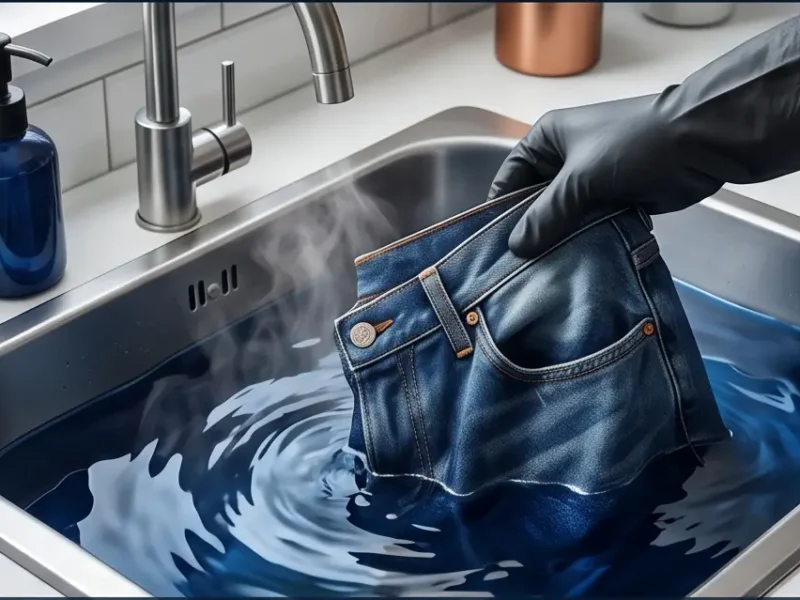
Faded jeans do not always need replacing. With the right dye for the fabric, careful preparation and a thorough rinse, you can refresh the colour of many denim garments at home. Results depend on the original shade, fibre blend and dye product, so always follow the manufacturer’s instructions and test an inconspicuous area first.
This guide explains how to dye jeans at home, how to reduce uneven colour and crocking, and how to care for the finished pair. If your jeans feel stiff after washing, see our guide to softening stiff denim safely; for a worn-in look, learn how to distress jeans at home.
Before you dye jeans: check the care label
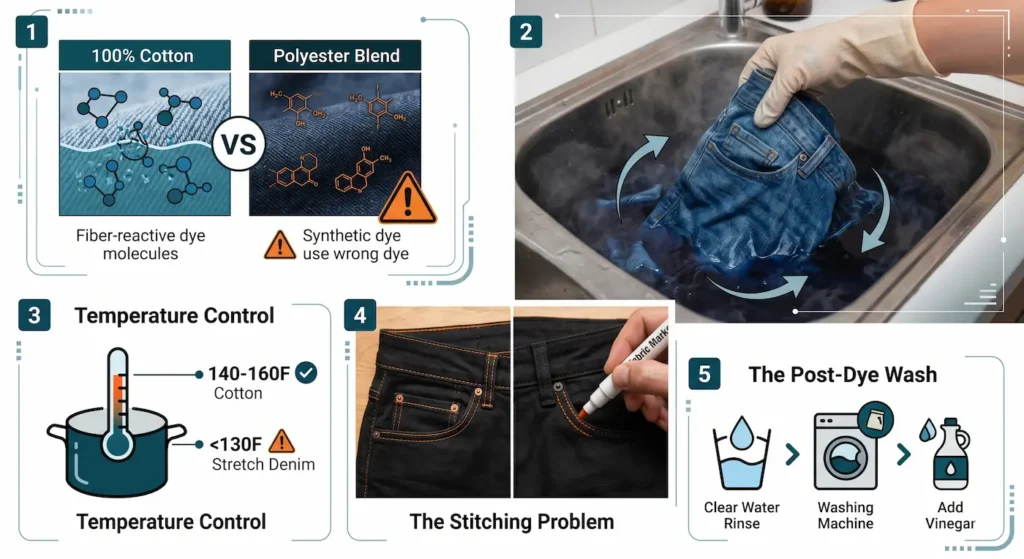
Check the fibre content and care instructions before choosing a dye. Cotton denim generally takes a cotton-compatible dye, while polyester and other synthetics need a dye specifically formulated for those fibres. Stretch jeans contain elastane, which can be damaged by high heat; choose a method and temperature suitable for the garment and dye product. Topstitching may remain a contrasting colour if it is polyester.
Dye adds to the existing colour rather than removing it. A dark or strongly coloured pair will not become pale or reliably take on a lighter shade with ordinary dye. For a major colour change, use a colour remover only if its label says it is suitable for your fabric, and follow its safety directions.
How to dye jeans at home
1. Wash the jeans first
Wash the jeans to remove soil, finishes and residues that can interfere with even dyeing. Do not use fabric softener. Keep the garment damp if the dye instructions recommend starting with wet fabric.
2. Prepare the dye bath or washing machine
Use the amount of water, dye, salt or other additives specified by the dye manufacturer. Salt is included with some cotton dye processes, but it is not a universal fixative. Do not substitute vinegar unless the dye instructions call for it. Protect nearby surfaces and wear gloves.
3. Keep the fabric moving
Fully immerse the jeans and stir continuously at first, then at the intervals stated on the product label. Consistent movement helps reduce streaks and blotches. Follow the specified water temperature; do not apply high heat to stretch denim unless the care label and dye directions explicitly permit it.
4. Rinse until the water runs clear
Rinse the jeans as directed, then wash them separately with a mild detergent if the dye instructions recommend it. A commercial dye fixative may help when it is compatible with the dye and fabric, but follow its own label rather than relying on household vinegar.
5. Air-dry and protect the colour
Air-dry the jeans away from direct heat. For the first few washes, wash them separately or with similar dark colours. Turn them inside out, use cool water and a gentle cycle to help limit fading and dye transfer.
Five tips for a more even, fade-resistant result
- Match dye to fibre: cotton dye may not colour synthetic stitching or elastane evenly.
- Start with clean, damp fabric: follow the dye label for preparation.
- Use enough room and liquid: crowded fabric can take colour unevenly.
- Stir consistently: keep folds from sitting in one position in the dye bath.
- Wash gently afterward: cool water, inside-out washing and air-drying can help preserve colour.
Common problems when dyeing jeans
Why did the stitching stay orange or white?
Many jeans use polyester thread, which may not take a cotton dye. This contrast is normal. If you want to recolour stitching, use a product designed for that material and test it carefully; a fabric marker can also be used for small areas, though results vary.
Can I dye stretch jeans?
Often, but the cotton and elastane components may take colour differently, and heat can damage stretch fibres. Choose a dye explicitly suitable for the fibre blend and stay within the garment’s care limits.
How do I reduce dye transfer?
Rinse and wash the garment as directed until excess dye is removed. Keep freshly dyed jeans away from light upholstery and pale clothing until the rinse water is clear and the garment has been washed. Continue to wash dark denim separately if colour still releases.
Will dyeing shrink jeans?
Dye itself is not the main cause of shrinkage; heat and agitation can affect fit, especially with cotton denim. Follow the care label, avoid unnecessary high temperatures and air-dry if you want to reduce heat exposure. See our guide on how to shrink jeans safely if you need to adjust fit.
How long will a home dye job last?
It varies with the dye, fabric, original finish and washing routine. Turning jeans inside out, washing them in cool water with a gentle detergent and avoiding bleach can help slow colour loss.
Frequently asked questions
Can I dye black jeans black again?
Yes, a compatible black dye can refresh faded black denim, but the final shade depends on the starting colour and fibre blend. Follow the product instructions and expect synthetic stitching to remain lighter.
Can I dye blue jeans a different colour?
The original blue affects the result because dye layers over the existing colour. A lighter garment is generally easier to recolour than dark indigo denim. Check the dye maker’s colour guidance before starting.
Can I use a washing machine?
Only if the dye product is designed for machine use. Follow its cleaning instructions afterward and check your washer manual before using any cleaning agent; never mix bleach with other cleaners.
Refresh your denim with care
Dyeing can extend the life of faded jeans when you choose a suitable product, prepare the garment well and follow the label through dyeing, rinsing and aftercare. For more at-home denim projects, explore our guides to upcycling jeans into denim shorts and why denim fades over time.

Recent Comments