
Quick Steps to Soften Stiff Jeans
Don’t panic if you JUST bought jeans that fit like a sheet of drywall rather than, oh, I dunno, clothing? They are easily softened up and not damaged.
Turn those rigid blue jeans inside out and toss them into the washer using warm water, along with ½ cup vinegar (don’t use a commercial softener). Then, as soon as the cycle is finished, throw them in the dryer on lower heat with 3 or 4 wool dryer balls. These balls will bend the stiff denim fibers in a way that provides the comfort of lived-in jeans without compromising their structure.
Stiffness is especially common with raw and selvedge fabrics; learn more in our selvedge denim guide.
Why Is Your Denim So Stiff? (Understanding Your Fabric)
We’ve all had that experience — you buy the expensive, nice-looking jeans, pull them out of the box, and they can stand up on their own. It sounds a bit silly, doesn’t it? Why does expensive denim usually feel so stiff straight out of the box?
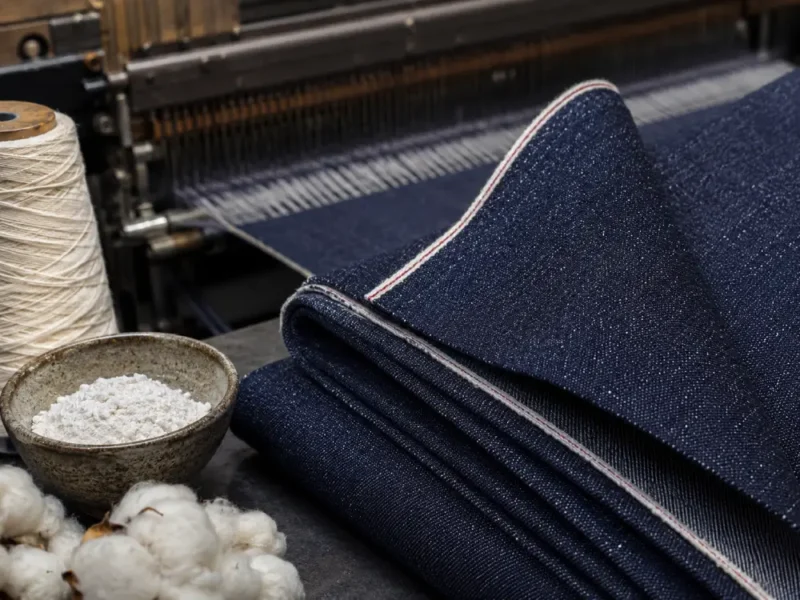
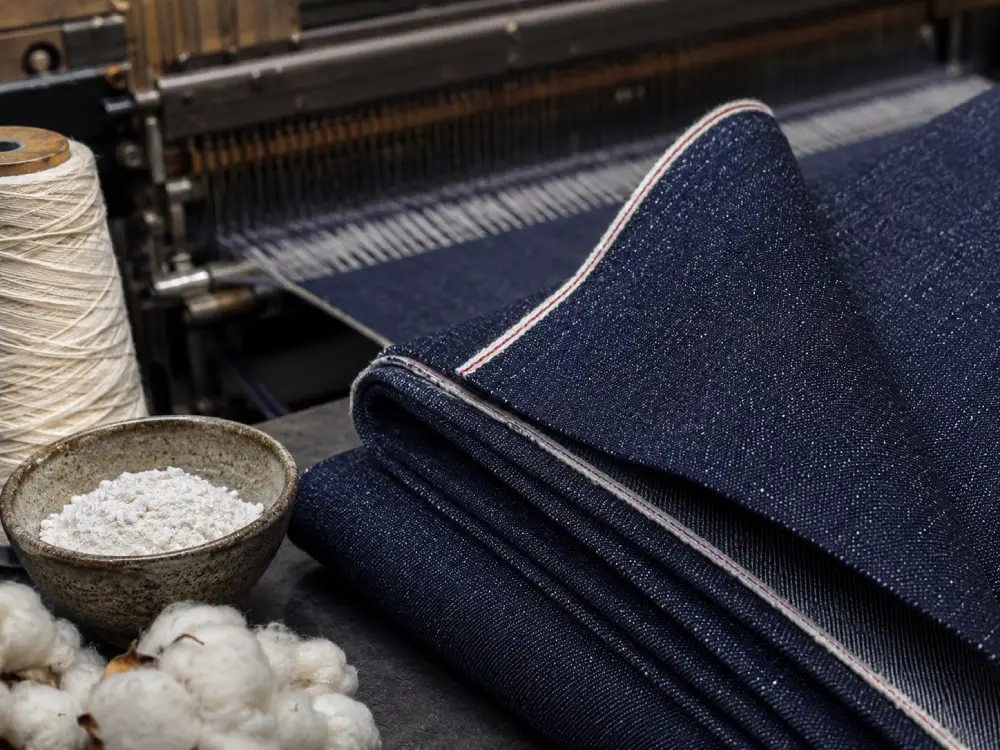
It really comes down to the way it is done. As the vertical “warp” threads are woven on industrial looms, manufacturers coat them with an enormous quantity of liquid starch during a manufacturing process known as sizing. You could think of this as your armor against it. This starch keeps the threads from breaking thanks to the sustained friction of high-speed weaving machines.
Loomstate denim is when the fabric is off the loom and has not been pre-washed or shrunk. Since that factory starch is still 100% intact, the jeans remain fully rigid until they receive their very first drink.
Why There Is No One-Rule-Fits-All Between Pure Cotton vs. Stretch Denim
What Are Your Jeans Made Of? Before you get started on softening your jeans, it is important to know what the contents are. You treat one fabric completely different than another.
Plain Denim: This is the old school heavyweight stuff made from 100% pure cotton yarns or has a minimum of 10% Poly-blend requirement for stretch denim. It is very, very durable and stains gorgeously to custom fades through use, but takes a much more extensive break-in period. You really have to earn it.
Stretch Denim Blends: This modern replacement weaves synthetic elastic fibers (such as elastane, spandex, or polyester) into the cotton. Actually, an incredibly durable denim, these jeans feel softer straight out of the box, but they are super sensitive to heat and harsh chemicals.
The clothing pros at Kaiping Lianwang Garment Co., LTD—an expert in high-quality women’s, men’s and children’s denim fabric–know the science behind this all too well. With an in-house professional R&D team boasting more than 15 members and over 20 years of manufacturing experience, they have the data to show that the construction of fabrics determines how a garment will act when washed; treat a pair of pure cotton raw denim pants as you would a high-stretch blend, and you may forever alter the shape of your most-loved quotidian trousers.
If your jeans still feel uncomfortable after breaking them in, the fit may be the issue. Our men’s custom jeans fit guide explains how rise, seat and inseam affect comfort.
The 4 Safe Ways to Soften Jeans & Avoid Losing Their Shape
The Natural Vinegar Soak (No Odor, Most Softness)
Instead of dousing your jeans in aggressive chemicals that ultimately dissolve their fibre strength, look in your pantry. Blessed vinegar is a few mild acetic acids.
Add a total of half a cup of white vinegar, and soak for 30 to 60 minutes. Although vinegar is a natural water softener, it will safely dissolve the factory starch and not harm the cotton fibers. When all of the above is done, run a normal rinse cycle. And don’t worry — you won’t smell like a salad. Once your fabric has dried, the vinegar scent vanishes completely, leaving you with a refreshed and visibly more semi-pliable denim.
One of the techniques you can use is the wool dryer balls method
A quick rub makes it break-in faster, but a tiny (remember a little goes a long way) safe movement will more than do the trick.
To avoid uneven rubbing and damage to that gorgeous blue indigo dye layer, turn your jeans inside out first. Place them in the dryer with 3 or 4 high-quality wool dryer balls on low-heat or air-fluff. The denim is pummelled gently by thousands of tiny hammers — the dense wool balls bouncing as the dryer tumbles. That constant rubbing and pressing flexes the stiff, densely woven threads to simulate roughly 40 hours of real-world wear in 40 minutes.
Deep Relaxation of the Fibers wrt the Cold-Water & Salt Approach
And for those heavy, stubborn pairs of raw denim, a simple sodium chloride (table salt) bath can do wonders to loosen the tight cotton weave.
Dissolve 1 cup of ordinary table salt in a bucket of water at room temperature. Dunk the jeans in, and swirl them around, stirring the saltwater into all the little pores of fabric. Let them soak overnight. This salt helps to dissolve any remaining sizing agents, while also trapping the indigo dye molecules as they escape. The next morning, wash them on a cold, gentle cycle without detergent and line dry.
The 5-Minute Emergency “Wear & Flex” Routine You Can Do Right Before Leaving.
If you are in a pinch and need to put on a pair of rigid jeans right away, simply warm them up with some kinetic motion.
Put your jeans on; put on a button-up and run the roads. Perform a few deep squats — perhaps around 10 or so, do a few lunges on either leg, and also some high-knee bends. The factory starch dissipates almost instantaneously as the naturally warm body warms to fabric, and the deep flexing compels it to stretch and conform directly with your unique physique.
What NOT to Do — The Most Common Mistakes When Stiffening Jeans
Commercial Fabric Softeners Can Ruin High-Quality Denim
It seems perfectly reasonable: your jeans feel stiff, so you add some liquid fabric softener. However, with regards to high-end denim, this is a huge blunder. The commercially used softeners function through a thin smear of silicone polymers that coat the textile fibers. Okay, it goes on slicker for a minute, but it really clogs the natural pores of the cotton. This accumulation of chemical debris subsequently imperils the insulation potential of the product, lures in dirt particles, and deteriorates the natural feel that defines quality denim to begin with (and… does anyone like creaseless jeans anyway?).
Sandpaper is the devil when it comes to non-distressed jeans, and pumice stones are little pieces of grapefruit.
I’m sure you’ve seen those DIY tutorials going around the internet that tell you to take sandpaper or pumice stones and rub them all over stiff denim? Industrial laundries utilise pumice stones to wash pre-distressed apparel, but attempting this manually at home on a clean, non-distressed pair of denim comes with an extremely high risk. Without commercial levels of precision, you get impatient and just cut through right amidst the structural threads, creating holes before they’re meant to exist, and unevenly thinned fabrics that ruin a perfectly clean aesthetic.
Why is excessive heat the worst enemy of stretch and elastane blend jeans
Modern denim comfort is the high heat’s worse enemy. Hot water or high-heat dryer cycles can literally melt that synthetic elastic core if your jeans contain any elastane or spandex. Once the elastane is gone, so are those jeans — they will never return to their tailored shape again, and there will be some horrible “bagging out” at the knees and waistband.
For brands that want a softer hand feel before products reach customers, see our overview of denim washing and finishing.
Featured Case Study: Professional Engineering Soft Denim
A great way to see how premium denim achieves extreme durability while also allowing immediate comfort is from the manufacturing floor of Kaiping Lianwang Garment Co., LTD.
Manufacturing Metrics: Operational Capacity & Infrastructure: Years of Manufacturing Experience: 20+ Years of Quality Denim: Manufacturing Facility Size7,000+ Sq Mtr: Production Floor Area: Garment Specialist Equipment 330+ Advanced Machines Number Of Full Cycle Garment Lines10 + Streamline Operations Annual Output 600,000 + Finished Pieces
Based in Jiangmen, Guangdong Province, this professional facility has fast and agile systems, including a dedicated manual section, an innovative sample department and more than 150 talented production operatives to monitor cloth quality right from the raw yarn to the final wash.
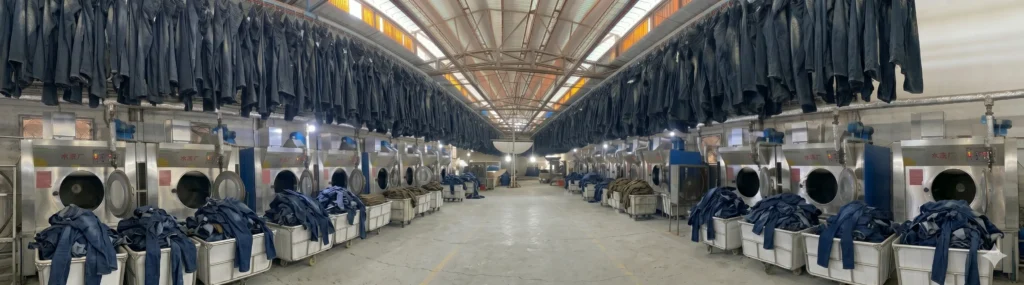
The factory also provides modified washing for customers with modern market demand through its comprehensive OEM and ODM services. Rather than compromising a domestic hack, their engineering team uses industrial enzyme washes and green-mechanical softening in the production run instead. This means that when their finished garments are shipped to international markets in Europe, North America and Australia, customers are delivered a pair of jeans that’s almost broken-in from day one but can maintain an elite structural performance during its life.
Summary Checklist: Do Not Make These Common Mistakes
Quit Using Liquid Softeners: They cover pieces with chemicals, closing the fabric pores and killing breathability.
Reduce the Temperature: When elastic fibres melt, it makes for sloppy, overstretched knees. High temperatures!
Don’t Use Sandpaper: Using manual abrasion wears down the weave and makes for very short-lived jeans.
Wash Inside Out Always (to avoid ugly friction streak marks and fading of your deep indigo dye)
FAQ: What You Should Know About Softening Up Some Comfortable Denim
Do jeans shrink in warm water?
Yes, it absolutely can. In fact, very hot water can shrink 100% Pure Cotton Denim very noticeably during its maiden wash. This means sticking with lukewarm or cold water cycles for your wash and avoiding the hot commercial dryer settings to maintain your fit the same. Wash stretch denim blends only in cold water to protect the delicate synthetic fibers.
What To Do:How can I remove the vinegar odour from my denim?
You don’t need to do a thing. Vinegar scent persists on the property and links to water debris. The vinegar odor disappears into the ether while your jeans are drying, whether hot against each other in low heat in the dryer or air-drying outside.
Heavy denim takes quite some time to run in naturally.
For those who do it simply via wear, a pair of heavyweight raw denim jeans usually requires roughly 30–60 days of consistent, everyday friendly wear until they begin to gently break themselves in. But you can shorten this timeline immensely by employing the aforementioned safe physical methods, consisting of tossing them into a fluff cycle on your air dryer with a few wool dryer balls.
The bottom line: wear the denim that has been perfectly lived in.
You do not need to destroy your clothes with chemical wear and tear or harsh, rough, abrasive implements to achieve that perfect, comfortable, second-hand-worn feeling. When you know the science of your fabric—ruffled raw cotton vs hot rod elastane blend—you can approach viable and non-destructive methods, such as vinegar soaks and wool dryer balls, to safely ease stiff strands.
As a global brand looking to source pre-softened, high-end denim apparel that avoids the harsh break-in phase entirely, partnering with an experienced manufacturer like Kaiping Lianwang Garment Co., LTD means your inventory is retail-ready, silkily soft and engineered to a world-class standard.

Recent Comments