Denim is one of your strongest fabrics in a closet full of clothes, but even the best pair of jeans wears out after extended wear. Instead of discarding worn-in jeans that would fit awesomely if only they were a bit darker in colour, you can refresh them at home yourself. It also breathes new life into your clothes and is the most environmentally friendly way you could possibly upcycle for your money.
We have decades of experience in the garment business, and as such, we know denim inside out. As an example, Kaiping Lianwang Garment Co., LTD has 20 years of experience in manufacturing. Today, we are breaking down the classic dye job of getting that factory-level colour fast success in your kitchen or laundry room.
The Golden Formula for Dying Jeans at Home in 3 Minutes
A perfect henna color is not easy to achieve, but it is possible with a systematic approach. Doing this allows your DIY denim to have that fresh out of a pro retail boutique look, if you follow this simple three-step golden formula.

DYE SPECIFICATION #1: Pick Dye Depending on Fabric Composition (Cotton %)
You need to look at the care label on your jeans before ordering your dye. The chemical formula of the dye you will need depends on the composition of that fabric.
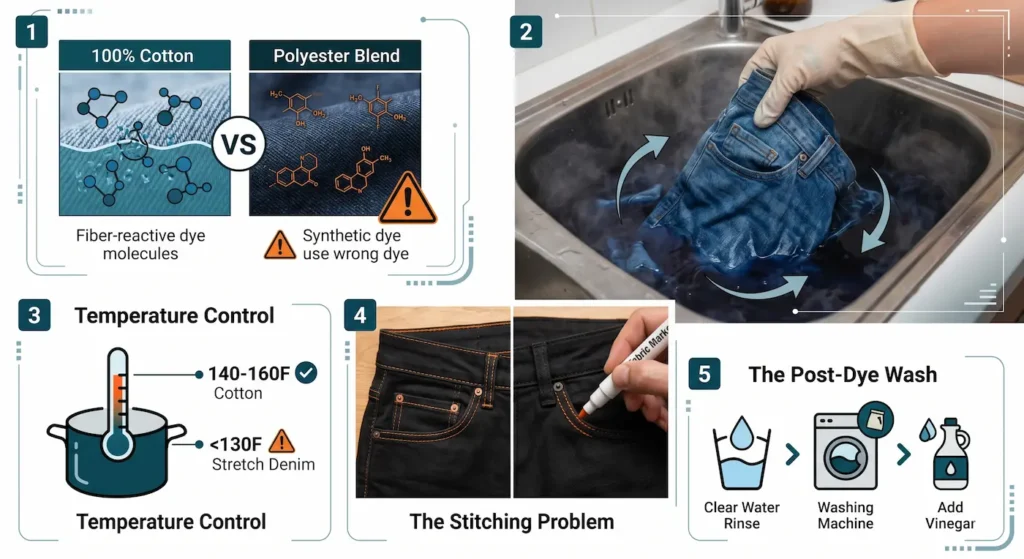
100% Cotton or High-Cotton Blends (70%+) ⇒ Standard Fiber-Reactive Dyes • All-Purpose Liquid Dyes. Easily absorbed by cotton fibres as they are highly porous.
Synthetic Blends (Polyester, Nylon, Acrylic): If your jeans have over 30% synthetic fibers, typical dye won’t adhere. You can only dye synthetics with a type of dye made for synthetics.
Golden Rule: Pick your dye by the highest percentage fiber on your tag.
Step 2: Wash Well and Leave Wet (No Fabric Softener)
One common error amongst DIYers is to simply toss their dry, unwashed jeans directly into the dye bath. To ensure even color distribution, your jeans must be washed completely beforehand.
Note to Remember: Do not use fabric softener or dryer sheets in this wash cycle. Any fabric softeners leave behind a microscopic layer of silicone that repels moisture and undermines the ability for those dye pigments to penetrate evenly into the same denim fibers they were applied to.
Once the washing cycle is over, do not dry the jeans. Do your best to keep them semi-dry, as wet fibers suck up dyeing liquids way better than dry ones.
Step 3: Dip, Soak and Fix at the Right Temperature
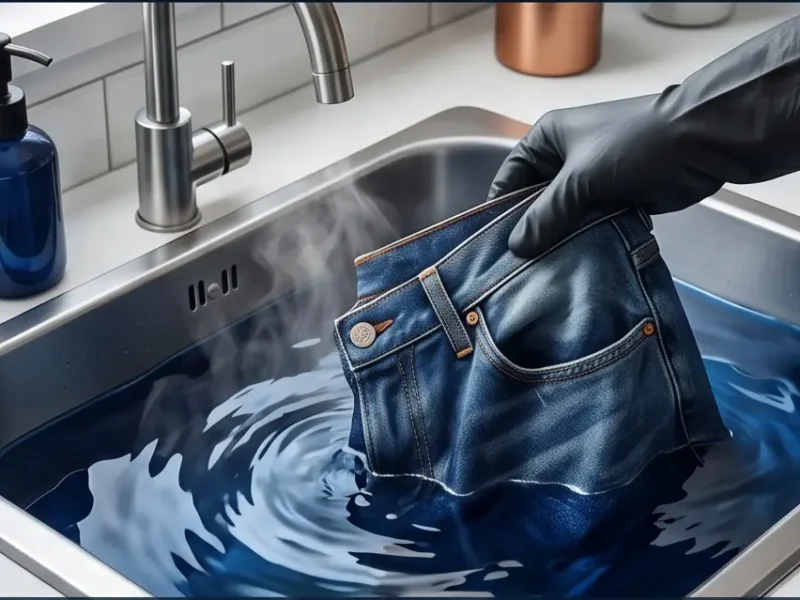
In order to fix the color permanently in the fibers of your fabric, you have to control the dye bath temperature and movement.
Ideal Water Temperature: Maintain water temperature within range, approximately between 60°C and 70°C (140°F to 160°F). This means that when cotton is hot, its molecular structure opens up and there is full room for dye absorption.
Steady Movement: For the first 20 minutes, completely submerge the sopping jeans in those canning supplies and stir them on the regular. Any movement without breaks helps avoid splotches, dark streaks, and uneven patches.
The Secret Fixative. For cotton, in the dye bath, add 1 cup of non-iodized table salt. If you are dyeing silk or wool blends (protein fibers), use 1 cup of white vinegar instead. This is because the salt acts as a natural mordant, coercing the pigment molecules to join with and bond permanently to the cellulose of my cotton.
How to Avoid the 3 Most Common Denim Dyeing Disasters
Most internet tutorials gloss over the hidden technical challenges of denim construction. Here is how you can use factory-level knowledge to bypass the three most common pitfalls of home dyeing.
| Common Dyeing Disaster | The Root Cause | The Professional Solution |
|---|---|---|
| Contrasting Stitching | Polyester threads reject dye. | Use a matching fabric marker. |
| Misshapen Stretch Jeans | Excessive heat ruins spandex. | Lower the heat; use liquid fixatives. |
| Color Crocking (Bleeding) | Unbound pigment rubs off. | Use a commercial color lock wash. |
Pitfall 1: No Colour Stain with Polyester Stitching? Step 9: Use Fabric Markers for the Perfect Match
You know how you can dye a pair of bleached blue jeans black, and no matter what, the orange stitching stays bright? Part of it is that common factory denim often uses poly thread or heavy cotton thread that is super durable. Polyester is a total no-no with a normal cotton dye.
Now, the expert way to resolve this issue is, after dyeing, let the jeans dry fully. You need to buy a permanent fabric marker with dual tips and match your new denim color exactly. Trace the polyester stitching with precision. Many fabric markers contain an alcohol-based ink that dissolves on contact with synthetic threads, allowing for a comprehensive finish that is not just durable but also permanent across fabrics like polyester and silk.
Pitfall 2: Ruin the shape and stiffness of Spandex (normally a tough material to dye) when dyeing Stretch Denim
The secret behind stretch denim is the use of elastomers, or stretches: spandex, or as you may know it, Lycra. For this reason, synthetic fibers are especially sensitive to extreme heat. The sticky, elastic core of stretch jeans breaks down at high temperatures; hence, if you boil a pot of stretch jeans-stuffed water for an hour, the denim will never come out without permanent bagging, wrinkling and distortion.
Dry your stretch denim between 20–30°C, that is the max water temperature ever; you should never wash higher than 55 °C (130°F). In this case, extend the stirring time to 45 min to account for the lower temperature. Also, include a commercial liquid color fixative straight into your final rinse water to lock in color without chancing extreme heat.
Pitfall 3: Goodbye “Couch Killer”! Preventing Crocking: The Pro’s Way During the First 3 Wash
“Crocking,” that tense act of dry dye migrating from your clothes to your skin, new white sneakers or the beige couch! This disaster is due to extra, non-fixed dye molecules stuck onto the denim yarn surface.
To keep those freshly dyed jeans from turning into a couch-killer, you need to run them through an intense post-dye rinse cycle:
Rinse the jeans in cold, running water until the water runs completely clear.
Wash the jeans alone in your washing machine with an old towel using a heavy-duty laundry detergent.
Add half a cup of white vinegar to the fabric softener compartment. The added acid neutralises the pH level of the textiles, which locks in what little pigment is left deep down within the fibres.
Advanced Denim Redyeing & Color Overhaul: High-Value LSI Long-Tails
But how do you actually achieve a radical shift in colour?? You will need to learn advanced textile color theory + how to care for your machine.
The black jeans that you wear will fade to a less dark tone as time passes; here are tips on how to restore them to deep, rich, powder black.
Black jeans eventually fade to a lifeless, ugly charcoal grey or brown. So to return them to an inky, dramatic jet black, you will need to neutralise the underlying faded tones.
Although faded black denim typically has warm yellow or orange undertones. For a rich, deep black tone mixed with navy dye, add a teaspoon of navy blue to your jet-black dye bath. The bluish pigments within eliminate the nasty warm undertones to leave you with a much darker, more complex and true black finish.
Color Theory 101: Are YouAble toDye Light/White Denim JEANS Navy Blue or Emerald Green?
The simple answer is yes, but you should keep in mind that fabric dye is not a solid; it is a transparent pigment. Think of it like watercolor paint: the fabric gets a base color, and even if you use the best dye in the world, it remains intermingled with that first layer.
White or light cream jeans: These are your blank canvas. They do not need to be dyed back into the royal blue, emerald green, or deep ruby red — these colors would only lose their affinities after rubbing with a cloth.
Classic Blue Jeans: If you dye medium-blue jeans with emerald green dye, they will be a blue-green colour. This produces a dark teal or muddy olive color in place of bright green. It is a good habit to look at a basic color wheel before you mix the base fabric color with the new dye color.
Washing machine Dyes (machine dye). How to clean the drum first, or soon ruin your next load.
The simplest way to achieve an even dye job is by using a washing machine, but many worry they will ruin their next load of white clothes. Easy protection for your machine when running a specific cleanup cycle straight after your project
Use a rag soaked in bleach, and wipe down the rubber door gaskets and the inside of the lid. After that, pour two cups of liquid chlorine bleach into the dispenser and run your washer on the hottest, longest cycle using no clothing in the drum. For ultimate room for error, chuck a bunch of old rags or dark socks in with the following wash before you add your beloved whites.
FAQ: Professional Denim Dyeing Secrets
Dyeing jeans that have bleach markings
Standard fabric dye will not fix bleach stains. Bleach actually destroys the fibers of the cotton; it chemically alters them and removes color. That’s why the bleached bits will always pick up dye differently, whether that be paler or more uneven patches. Before trying to redye the fabric, you will have to neutralise the bleach and use a whole garment dye remover.
Using one of these great methods will shrink my jeans.
Although the dye itself will not shrink your clothes, the hot water that you need to set it in could. Your jeans are probably 100% raw cotton — just know that a tiny bit of shrinkage will occur when exposed to any temperature higher than 60°C, and air-drying your jeans on a drying rack instead of cycling your jeans through a high-heat mechanical dryer means you can avoid the risk.
First question would be, how long does home dye last?
A quality home dye job, when cared for properly, can last as long as 20–30 shampoos. Washing your dyed denim inside out and on a cool, gentle cycle will help to keep those colours fresh. Do not use strong detergents with optical brighteners, bleach or other harsh chemicals.
Bandage Dress – Idea Overload Conclusion: Eco-Friendly Denim upcycling that Saves your Wallet and Your Wardrobe
This is a fabulous way to practice sustainable fashion while extending the life of textiles and recycling the wardrobe budget — dye your faded denim at home. You learn to master the correct fabric compositions, get your water temperatures right and control post-dye washes – all resulting in perfect results that match those achievable with workworn fabrics you can buy from a factory.
Kaiping Lianwang Garment Co., LTD is dedicated to reducing energy and expanding energy consumption for mass production and sustainable development. Actively carry out green environmental protection initiatives, such as energy-saving light sources and steam recovery systems for boiler exhaust. It is the deployment combating climate change that has been carried out to uphold corporate social responsibility in low-carbon operation. In the journey to upcycle your clothing at home, you are becoming part of an ever-changing wave around the world that is making their local environment forward-thinking and eco-conscious.
Corporate owners find this denim fabric manufacturer as one-stop, premium quality and highly efficient OEM,ODM services, with questions answered within 30 minutes and 13 customized samples for free in days. So take care in your wardrobe, play with color and happy crafting!
If you found this guide useful, please … So which jeans are you going to restyle first?

Recent Comments