
TABLE OF CONTENTS
1.Introduction: Beyond the Basic Custom Denim Jacket
2.The Featured Snippet Zone: How to Customize Professionally
3.Advanced Customization Techniques & LSI Keywords
4.Hardware, Trims, and Private Label Essentials
5.Step-by-Step Production & Bulk Ordering Strategies
6.Maintenance and Longevity: Caring for Your Denim Masterpiece
7.FAQ Zone (Frequently Asked Questions)
8.Partner with a Proven Denim Industry Expert (Contact & Specifications)
1. Introduction: Beyond the Basic Custom Denim Jacket
1.1 The Evolving Landscape of Denim Customization
Denim is no longer just durable workwear. Today, it rules premium streetwear. Walk down any fashion hub and you will see it: consumers want pieces that scream individuality. They want real craftsmanship. For an independent brand, this shift is a goldmine. Custom denim moves the needle for your brand equity. It drives serious, high-margin revenue. But you cannot scale a brand on basic ideas. You need execution that rips.
1.2 Moving from DIY Crafts to Commercial-Grade Private Label Collections
Forget fabric markers. Forget cheap iron-on patches. That is hobbyist stuff, a total pain in the ass to scale, and it falls apart fast. A serious fashion label needs commercial-grade execution. Building a retail-ready collection means mastering fabric weights, industrial wash chemistry, and structural limits. I have seen too many indie brands launch with subpar manufacturing, only to get crushed by customer returns. To win, you must team up with an elite partner like Kaiping Lianwang Garment Co., LTD, a premier garment enterprise specializing in high-quality women’s, men’s, and kids’ denim. You need industrial muscle to turn sketches into profit.
2. The Featured Snippet Zone
How Do You Customize a Denim Jacket for a Professional Brand?
Featured Snippet Direct Answer:
To customize denim jackets professionally, select the fabric weight, draft a tech pack allowing for 3%-7% wash shrinkage, apply commercial decoration techniques like high-density flat embroidery or discharge screen printing, specify nickel-free brass hardware, and perform certified pull-tests to ensure apparel manufacturing durability.
For branded details such as buttons, rivets, zippers and patches, see our guide to custom denim trims.
3. Advanced Customization Techniques & LSI Keywords
Selecting the Perfect Raw Denim Canvas and Fabric Weight
100% Rigid Cotton vs. Stretch Denim for Streetwear Silhouettes
Let’s talk fabric. The raw textile canvas dictates everything about how your jacket hangs, wears, and ages. Choose wrong, and your designs will look cheap out of the box.
100% Rigid Cotton: This is the gold standard for oversized, boxy, drop-shoulder streetwear styles. It usually weighs between 12 oz and 14.5 oz. It holds its shape perfectly. It also takes a beating from heavy industrial distressing and stone washing without shredding to pieces.
Stretch Denim (Cotton-Spandex Blends): This fabric is lighter, hitting around 9 oz to 11 oz. It has 1% to 3% elastane. It works fine for slim, tailored women’s jackets. However, it lacks the raw, rugged structure needed for heavy panel adjustments and complex streetwear embroidery.
Factoring in Wash Shrinkage and Fit Tolerances in Tech Packs
Here is a mistake that costs thousands. Raw denim shrinks during industrial washes, enzyme treatments, and heat drying. If your tech pack does not account for this, your final goods will arrive two sizes too small.
Your blueprints must include a built-in shrinkage tolerance. We are talking 3% to 7% vertically and horizontally. When I review production sheets, I always look for this buffer. Fortunately, a top-tier factory with an experienced sample department can precisely adjust your patterns during early digital drafting to eliminate this headache.
[Target Finished Width] x (1 + Shrinkage Factor) = Pattern Cutting Width
Example for 5% Shrinkage: 50cm x 1.05 = 52.5cm
Commercial Denim Decoration Methods Explored
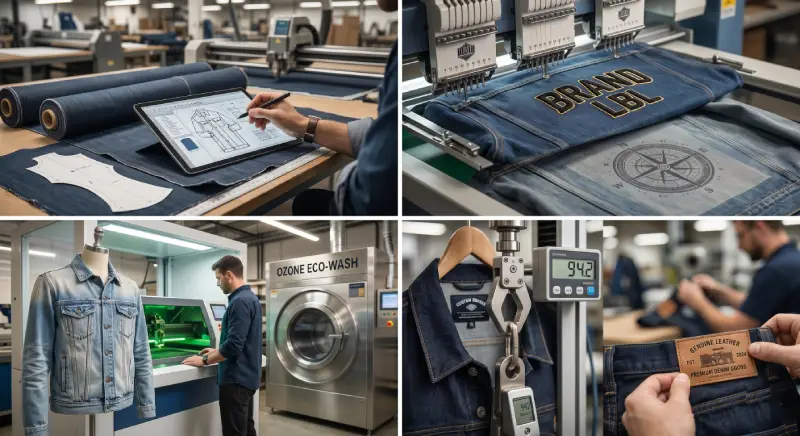
Flat and 3D Puff Embroidery: Stitch Density Rules
Embroidery instantly makes a garment look premium. But heavy denim requires specialized embroidery programming.
Flat Embroidery: Perfect for clean, multi-colored logos and fine text. Your stitch density must be tight. If it is too loose, the indigo warp and weft threads peek through and ruin the graphic.
3D Puff Embroidery: This uses an underlying foam insert to make the design pop. It works best for bold, blocky typography on the back panel.
To execute this across thousands of pieces without puckering, your manufacturer must deploy advanced apparel machinery. Kaiping Lianwang Garment Co., LTD runs over 330 pieces of high-end garment equipment across 10 production lines to handle these exact high-density demands.
Plastisol vs. Discharge Screen Printing on Dark Indigo Denim
Printing on dark indigo denim is tricky due to dye migration. Choose your ink wisely.
| Printing Method | Mechanics on Indigo Denim | Visual & Tactile Result | Best Used For |
|---|---|---|---|
| Plastisol Printing | Sits right on top of the fabric fibers. It requires a heavy white underbase coat on dark denim. | Bright, highly vibrant opaque colors. It feels thick and slightly rubbery. | Bold, graphic-heavy streetwear styles. |
| Discharge Printing | Chemical inks bleach out the original indigo dye, replacing it with your pigment. | Ultra-soft, breathable hand-feel. The design fuses directly into the weave. | Vintage, retro, or subtly distressed aesthetics. |
Laser Distressing and Sustainable Ozone Wash Effects
Hand-scraping and old-school chemical stone washing are outdated. They take too long and waste resources. Modern manufacturing relies on laser machines to etch perfect rips, whiskers, and honeycombs directly onto denim panels with digital precision.
To get that beautifully faded, ice-blue vintage look without destroying the planet, top factories use industrial ozone wash systems. This process relies on gas rather than thousands of gallons of water. It cuts the fat out of resource consumption. It also fulfills your brand’s environmental and low-carbon social responsibilities.
Avoiding the “Stiff Back” Issue with Appliqué Patches
How High Stitch Count Embroidery Affects Garment Drape
I see independent brands make this mistake constantly. They put a massive, high-stitch-count embroidery design right across the back panel. It looks cool on screen. In reality, it is a disaster. Because embroidery creates an incredibly dense web of thread, it completely immobilizes the denim underneath. The back of the jacket becomes stiff as cardboard. It ruins the natural drape, feels awkward, and makes the jacket a nightmare to wear.
Using Twill Appliqué and Fleece Backing for Ultimate Wearer Comfort
How do you fix this? You use Twill Appliqué.
Instead of filling a huge space with millions of tiny stitches, the factory cuts a piece of premium cotton twill or felt to match your shape. They lay it down and secure it with a clean satin border stitch. This smart workaround slashes your stitch count by up to 70%. The jacket retains its natural drape. To make it feel even better against the skin, have the factory line the interior reverse side with a soft fleece or lightweight jersey backing. It feels incredible.
4. Hardware, Trims, and Private Label Essentials
Upgrading Your Custom Jean Jacket with Premium Hardware
Specifying Nickel-Free Brass Shank Buttons and Heavy-Duty Rivets
Hardware can make or break a jacket. Cheap aluminum buttons bend, rust, and snap off after three washes. It looks incredibly unprofessional. You need to specify custom-branded, nickel-free brass shank buttons and heavy-duty structural rivets. Using nickel-free metals is non-negotiable. It ensures your line complies with global consumer safety standards regarding skin allergens, allowing you to sell worldwide without legal issues.
Quality Control Standards: The 90-Newton Button Pull-Test
Your hardware must be attached using automated pneumatic press machinery. To ensure everything stays locked in place, professional factories run a strict 90-Newton button pull-test. A machine pulls on the button with continuous force for 10 seconds. If it breaks or detaches under less than 90 Newtons of force, the entire batch fails inspection. This rigorous step stops hardware failures before your goods ever hit customer hands.
Brand Identity Through Custom Woven Labels and Hang Tags
+-------------------------------------------------------------+
|                     BRANDING REAL ESTATE                    |
|                                                             |
|   [ Inner Neck ] ------> Satin Woven or Inner Neck Print     |
|                                                             |
|   [ Waistband ] -------> Genuine Leather / Vegan PU Patch   |
|                                                             |
|   [ Side Seams ] ------> Small Woven Tab Flag Label          |
+-------------------------------------------------------------+
Leather Patches (Genuine vs. Vegan PU) for Waistband Branding
A custom patch on the back waistband is the ultimate signature for denim branding.
Genuine Leather Patches: These offer a classic, high-end look. They age beautifully, developing a unique patina and darkening with every wash cycle.
Vegan PU Patches: An excellent choice for eco-conscious contemporary brands. They provide total consistency in color, texture, and crisp laser engraving across thousands of units.
Inner Neck Printing vs. Satin Woven Main Labels
For interior neck branding, you have two great retail options. A high-density Satin Woven Main Label sewn on all four sides delivers a traditional, luxury feel. If you are customizing lighter stretch denim, go with Inner Neck Screen Printing. It offers a completely tagless, scratch-free finish that modern consumers love.
Before sampling, document measurements, materials and construction in a denim tech pack so the factory can quote and build against clear specifications.
5. Step-by-Step Production & Bulk Ordering Strategies
The Manufacturing Workflow for Custom Denim Collections
Step 1: Digital Mockup Creation and Tech Pack Finalization
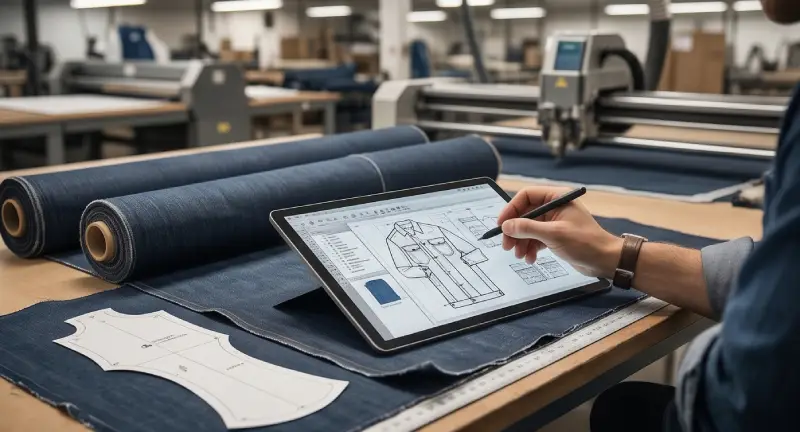
Your journey starts by turning your creative ideas into an industrial blueprint. You supply the core concepts, and the engineering team crafts an exact tech pack. This includes flat vector mockups, grading charts, seam specs, and exact placement measurements for your logos.
Step 2: Pre-Production Sample (PPS) Approval and Wash Matching
Never cut mass fabric without a physical sample. The factory creates an exact Pre-Production Sample (PPS) to showcase the chosen fabric weight, fit, stitch colors, and hardware. Most importantly, it lets you check the wash effect. Kaiping Lianwang Garment Co., LTD relies on its highly creative team and strong sample development skills to nail this step, delivering your sample within 10–20 days.
Step 3: Bulk Fabric Cutting, Panel Decoration, and Garment Assembly
Once you sign off on the PPS, the factory fires up mass production. Massive fabric rolls are spread out and cut into panels. Here is an industry secret: any complex flat embroidery or screen printing happens directly on the flat panels before they are sewn together. This ensures absolute precision. From there, the pieces move down specialized assembly lines where heavy-duty sewing machines build the actual jacket shell.
Step 4: Industrial Washing, Finishing, and Final Quality Control (QC)
The raw, assembled jackets are sent to industrial wash houses for enzyme or ozone treatments. After washing, they head to the finishing line where workers install buttons, trim stray threads, and press the garments. Finally, everything goes through a 100% full inspection before packing to guarantee your customers receive flawless pieces.
Navigating Minimum Order Quantities (MOQs) and Timelines
Balancing Complex Customizations with Factory Lead Times
Complex denim treatments—like combining heavy laser distressing with multi-panel embroidery—can slow down your supply chain. To launch on time, you must align your design complexity with a factory that has serious capacity.
Working with a well-equipped manufacturer is a game-changer. Kaiping Lianwang Garment Co., LTD operates a 7,000 square meter facility with over 150 workers and a 15+ person professional R&D team to keep production moving fast. This massive setup allows them to offer a swift bulk production period of just 25–35 days, keeping your independent store agile and stocked.
To understand how wash treatments affect softness and finish, see our guide to denim washing.
6. Maintenance and Longevity
Caring for Your Customized Denim Masterpiece
Commercial Wash Instructions for Coated and Painted Apparel
If your custom denim line features unique elements like wax coatings, resin washes, or graphic prints, your care labels must guide your customers correctly. Instruct them to flip the jacket inside out before washing. They should use a cold, gentle cycle (35°C or lower) with a mild, bleach-free liquid detergent.
How to Prevent Cracking and Fading Over Long-Term Wear
To keep your custom prints crisp and preserve the deep indigo shade, share these tips with your audience:
Ditch the Dryer: High heat from commercial dryers ruins elastane fibers in stretch denim and cracks plastisol prints fast. Hang drying in the shade is the only way to go.
Wash Less Often: Denim is tough. Tell your customers to spot-clean small stains or pop the jacket in the freezer overnight to kill bacteria instead of washing it constantly.
7. FAQ Zone (Frequently Asked Questions)
Our sample development department builds and delivers an accurate, high-quality custom pre-production sample within 10–20 days of finalizing your tech pack.
We keep our production timeline tight to support fast-moving brands. Our standard manufacturing period takes just 25–35 days, and every order undergoes a full inspection before it leaves the floor.
Yes, we handle both. We offer complete OEM services, helping you customize every single detail from the wash and fabric to logo printing and packaging. We also provide strong ODM services backed by our 15+ person professional R&D team to help you develop standout products for your market.
They are. We charge an upfront fee to develop your initial pre-production samples. However, that sample cost is refunded directly to you as soon as your bulk order meets our target order quantity.
We stand behind our work. All products are fully inspected before shipment to ensure premium quality, and we provide all necessary national quality requirement certificates and reports before dispatch. If any defective items turn up during sales, we replace the broken pieces.
We know speed matters for independent store operators. Your inquiries or emails will receive a reply within 30 minutes, and we can provide latest quotations and specific product specifications within 3 hours.
Partner with a Proven Denim Industry Expert
Choosing the right manufacturing partner is everything when expanding your apparel line. Kaiping Lianwang Garment Co., LTD is a professional garment enterprise combining development, production, sales, and processing export trade under one roof. Based in Jiangmen, Guangdong, China, we bring over 20 years of manufacturing experience to your brand.
Our massive 7,000 square meter factory features more than 330 pieces of garment equipment and a team of over 150 workers, including our manual, sample, and production line departments. With an annual output exceeding 600,000 pieces, we reliably export top-tier denim across Europe, the United States, and Australia.
Ready to scale your next private label collection with a fast, eco-friendly partner? Let’s talk. Contact us today, and we will send over a custom quote and full specifications within 3 hours.

Recent Comments