
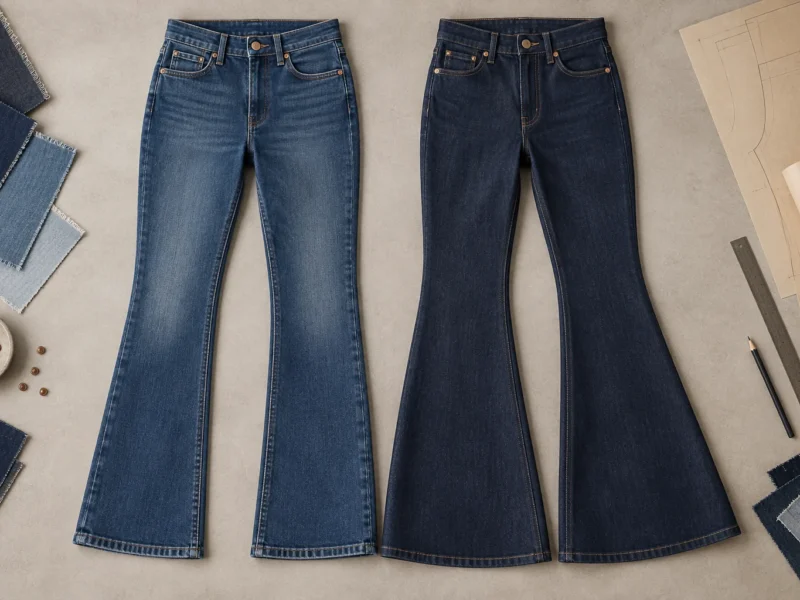
Flare jeans vs. bell bottoms: both widen below the knee, but the amount and starting point of that flare create very different looks. Flare jeans usually open gradually for an easy everyday silhouette; bell bottoms have a more dramatic, wider hem that reads distinctly retro. Compare the knee break, hem width, rise, fabric and inseam before choosing.
This guide explains the fit differences in practical terms, how to choose a length for your shoes, and what to check when ordering. For a product-development view of related silhouettes, see our guide to custom flare and bootcut denim.
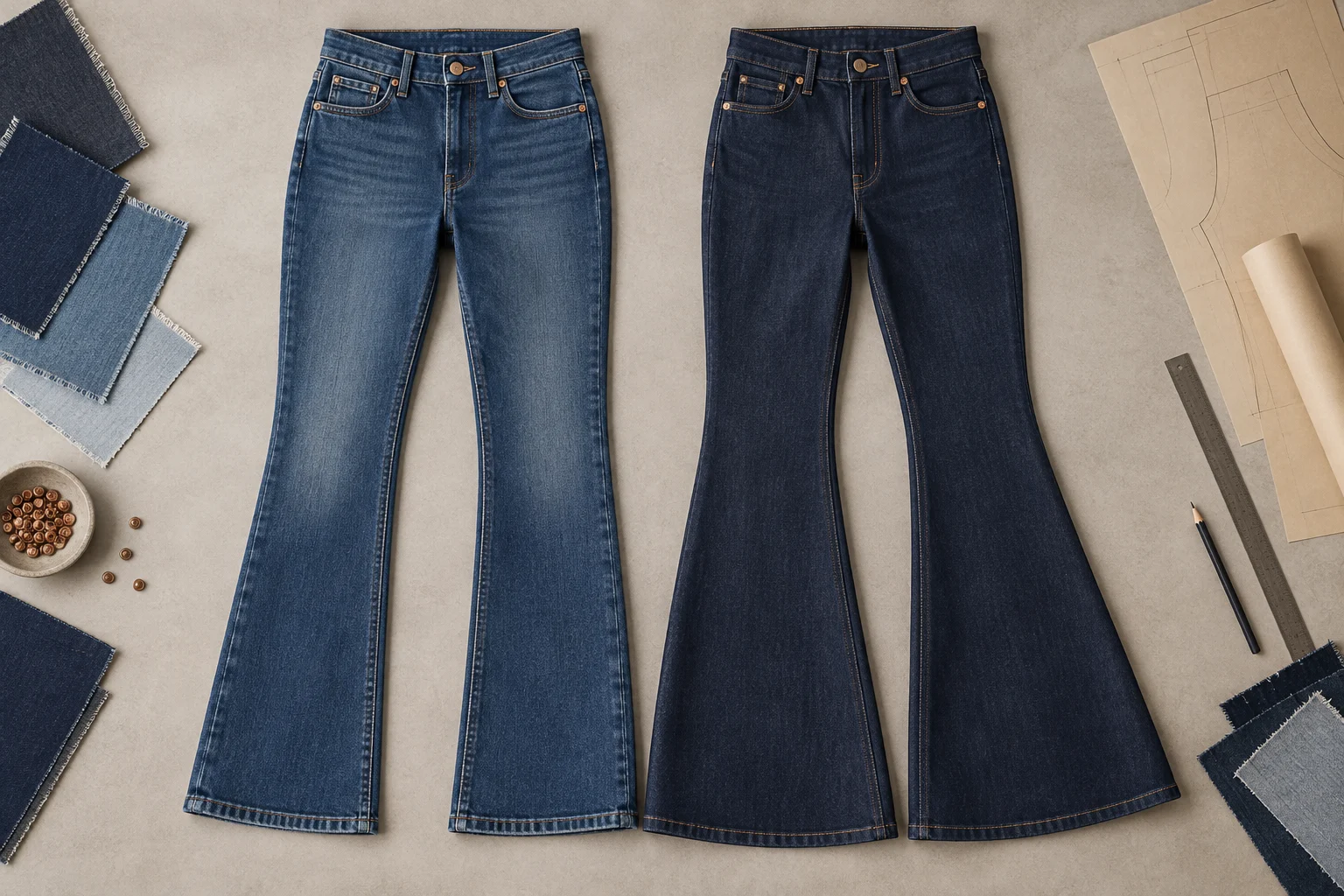
Flare Jeans vs. Bell Bottoms: The Main Differences
The easiest way to tell the styles apart is to look at the leg from the knee to the hem. A flare has a measured, gradual opening. Bell bottoms typically stay close through the thigh and knee, then expand more noticeably around or just below the knee. There is no universal hem measurement that defines either style: brands use the names differently, so compare the garment measurements and photos.
| Fit detail | Flare jeans | Bell bottoms |
|---|---|---|
| Leg shape | Gradual outward curve below the knee | More dramatic widening, often with a broad bell-shaped hem |
| Visual effect | Balanced and versatile, from subtle to pronounced | Distinctly retro and statement-making |
| Best measurement to compare | Knee and leg-opening circumference | Knee and leg-opening circumference; check how quickly the leg widens |
| Footwear planning | Works with flats, sneakers, loafers or boots when the inseam is right | Often styled over boots or platforms; hem clearance matters |
| Alterations | Shortening can still change the balance; preserve the original hem when possible | A wide hem can lose its shape if shortened substantially |
What Are Flare Jeans?
Flare jeans follow the hip and thigh, then open below the knee. The flare can be subtle, sometimes called a micro flare, or much wider. That range makes the label alone a poor guide: check the knee and hem measurements, and view the jeans on a model if possible. For a related silhouette, compare the leg opening with a women’s bootcut denim style, which generally has a more restrained opening.
How flare jeans fit
Fit through the waist, rise, seat and thigh depends on the cut and fabric, not the word “flare.” A stretch denim may feel closer to the body; rigid denim may feel structured and relax with wear. Check the size chart, fabric composition and care instructions. If you are buying for a brand collection, our jeans sampling guide explains how to review measurements and movement at sample stage.
What Are Bell Bottoms?
Bell bottoms are defined by a pronounced expansion toward the hem. Many designs start widening near the knee and finish with a broad opening that falls over footwear. The exact shape varies: some are fitted through the thigh, while others have a more relaxed upper leg. “Bell bottom” is a style description rather than a standardized measurement, so look at the full leg line and compare the actual opening.
How bell bottoms fit
Check the rise and hip fit as carefully as the hem. A dramatic lower leg does not guarantee a particular body-shape effect; proportions, wash placement, garment length and personal preference all influence how a pair looks. If the jeans need shortening, ask a tailor to preserve the original hem width and flare shape.
How to Choose the Right Silhouette
Choose flare jeans for a more adaptable everyday look
A moderate flare is a useful starting point if you want a leg opening that works across several outfits. Pair it with sneakers or flats for a casual look, or with ankle boots and a jacket for a sharper outfit. The hem should skim your shoe without dragging on the ground.
Choose bell bottoms for a more pronounced retro shape
Pick bell bottoms when you want the wide hem to be a visible part of the outfit. Try them on with the shoes you plan to wear most often: platforms or boots may provide useful clearance, but the correct inseam depends on your height, shoe and preference. Avoid choosing solely by a model photo taken in heels.
Fit Checklist: Knee, Hem, Rise and Inseam
- Knee position: Check where the leg begins to widen. A higher break can make the lower leg look longer; a lower break gives a different balance.
- Leg opening: Compare the stated circumference at the hem and knee. Confirm whether the retailer gives a flat width or a full circumference.
- Rise and waist: Review front and back rise, then check the waistband while sitting and bending.
- Inseam: Measure a pair of trousers that fits with the same shoes. Keep enough clearance to protect the hem from the ground.
- Fabric and recovery: Stretch percentage, weight and finishing affect how the garment feels and hangs. No single fiber blend is required for either silhouette.
- Wash and care: Washing can affect color and dimensions. Follow the care label and check shrinkage guidance before altering a new pair.
For product teams defining these points in a specification, our denim tech pack guide covers measurement callouts and sample notes. After approval, use a denim quality-control checklist to review fit, seams and post-wash measurements.
Styling Flare Jeans and Bell Bottoms
Balance a wide hem with a top that defines the waist or ends near the hip, if that is the proportion you prefer. Tucked shirts, fitted knits and cropped jackets are common options. Longer layers can work too; consider where the hem of the top meets the widest part of the jeans. Treat these as outfit ideas, not rules—comfort and personal style matter most.
For footwear, match the inseam to the shoes you actually wear. A hem that covers most of a platform can create a long line, while a shorter flare can sit neatly above a sneaker. If you alternate between flats and heels, consider separate inseam lengths rather than expecting one pair to fit both equally well.
Flare Jeans vs. Bell Bottoms: Which Should You Buy?
Choose flare jeans if you want a gradual opening and a broad range of styling options. Choose bell bottoms if you want a stronger vintage silhouette and a wider hem. Before ordering either style, compare the rise, knee placement, hem circumference, fabric details and inseam with your own measurements and shoes.
Frequently Asked Questions
Are flare jeans and bell bottoms the same?
They are related, but the terms usually describe different degrees of flare. Flare jeans often widen more gradually; bell bottoms typically have a broader, more dramatic hem. Retailers may use the names differently, so compare measurements and product photos.
Are bell bottoms wider than flare jeans?
Often, yes, but there is no universal standard. Check the listed leg-opening circumference and compare it with the knee measurement to understand how pronounced the shape is.
Can a tailor shorten bell bottoms?
Yes. A tailor can shorten them, but removing a large amount from the bottom may reduce the width and alter the intended flare. Discuss preserving the original hem and shape before alterations.
What shoes go with flare jeans?
Flare jeans can work with sneakers, flats, loafers, boots or heels. The key is choosing an inseam that falls cleanly with the shoe and does not drag on the ground.
Should I choose stretch or rigid denim?
That depends on the fit and feel you want. Stretch denim may offer more ease of movement, while rigid denim often feels more structured. Check the fabric composition, garment measurements and care details rather than assuming one fabric type belongs to one silhouette.
Developing a flare or bell-bottom style for a collection? See our custom flare and bootcut denim manufacturing guide, then share your target fit, size range and wash direction with the team through Lianwang Garment’s contact page.

Recent Comments