
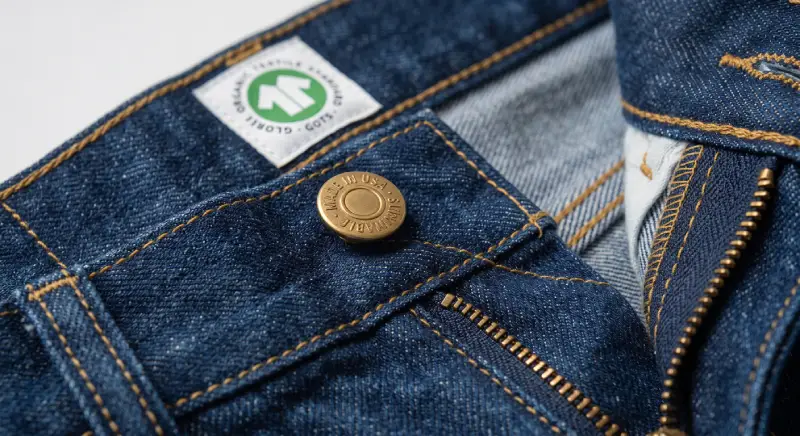
Overnight, the global fashion landscape is transforming. Independent brands and e-commerce store operators are in an age of fighting for life against competition. Choosing a production partner will be much more than just economics. It is not about agronomy, it is about speed, quality and the environment. As a consequence, companies are re-evaluating their sourcing strategies.
Despite the increasingly hostile environment, many denim jeans manufacturers in the USA are slowly but surely re-establishing sourcing and production ties with the region of origin.
Fashion supply chains have dotted the globe for decades. However, the tides are turning. Long-distance logistics has a huge implicit liability that brands are now aware of.
1. Why Sourcing from Denim Jeans Manufacturers in USA is Rebounding
The Speed-to-Market Advantage: Eliminating Ocean Freight Delays
Traditional supply chains depend more on ocean freight than anything else. However, shipping routes across the world continue to be more unpredictable every year. Inventory can stay stuck in ports for months at a time due to port congestion and geopolitical tensions. And as such, having local suppliers in or adjacent to the North American network is an enormous competitive edge.
You are able to come out with a product in weeks, rather than quarters, when you manage small-batch manufacturing. Local logistics can cause goods to arrive via ground transport in just days, whereas container ships take 60 days. So you can take advantage as an independent store before TikTok trends die out.
Quality Control Standards: Stitching Durability and Premium Hardware
Moreover, the best premium clothing brands depend on good product quality. Customers notice the differences immediately. Those saltwater-sharp American manufacturing centers keep jaws clamped tight on structural integrity.
· Stitching Durability: Heavy-duty lockstitch and strong bar tack (needle) are used by factories. It falls between zipper parts, which mitigates seam failures when using the material under heavy-stress wear.
· Premium Hardware — Local producers use heavy-duty YKK zippers and solid brass rivets versus cheap zinc alternatives.
· Uniformity: Workers trained under the same protocol create a uniform pair of jeans every single time, so that your bespoke denim production run mirrors its prototype exactly.
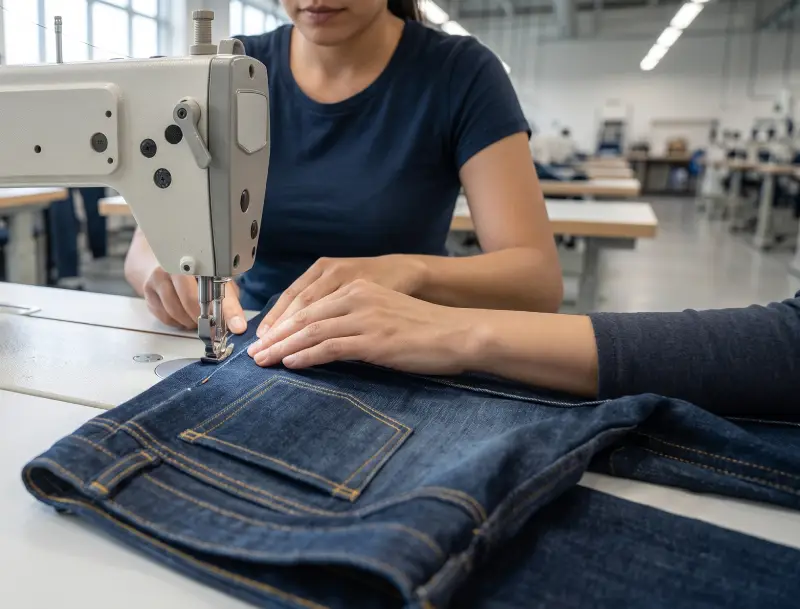
2. Top Sustainable Wholesale Denim Manufacturers in the US
Select your partner after taking a deep dive into their strengths. Listed below are four key players in the American apparel ecosystem, each targeting different types of brands.
Texas Jeans: The Heritage of 100% American-Made Workwear
Based on the rugged emphasis of your brand, Texas Jeans is one of the best choices. They are known for using everything American, from all the materials that are made in America to even hiring just Americans to do the work. From every thread, button and fabric roll – everything starts in the USA. Their catalogue revolves around vintage utility fits and old-school, heavy-ounce raw jeans.
Blue Age Jeans: Fast-Fashion and Trendy Streetwear Denim
Pre-2023 fashion trend reports (full year) Blue Age Jeans serves that exact solution. They focus on denim produced in high volumes and driven by trends. They fast follow contemporary streetwear silhouettes, damaged looks, and unique washes. So, they serve as the super quick-service jeans supplier for fast-fashion boutiques.
Cone Denim: The Legendary Eco-Conscious Fabric Mill
Not a finished-garment factory for independent brands, Cone Denim is the backbone of sustainable denim. Based on its historical roots and fuelling out of modern global facilities, they innovate new-age sustainable materials. They provide high-end, sustainable textiles for leading brands worldwide. You can then ask your bespoke clothing manufacturer to find real cloth from Cone Denim if you need a real, sustainable luxury experience.
Lianwanggarment: The Best Flexible Partner with Low MOQ for Startups
Rising independent brands need to find ways of managing high minimum order quantities (MOQs), which are very much one way street and incredibly risky. Kaiping Lianwang Garment Co., LTD is a top-notch private-label denim partner, and this is where we excel! They fill the gap between elite industrial capacity and startup agility.
[Key Factory Metrics]
• 20+ Years of Manufacturing Experience
• Facility Size: 7000 over Square Meter
• Production Assets330+ Garment Equipment Units | 10+ Production Lines
SEND CHAIN • Infrastructure: 150+ members for Production | 15+ members of R&D
While their central production infrastructure is handled through their giant 7000 square meter facility, the logistics system works well for Western markets. They promise lightning-fast replies, responding to queries within half an hour and product-specific quotes in 3 hours. In addition, it takes them just 10–20 days to develop a sample. The sample cost is a 100% refund if you reach the target volume for your order. They have an extremely fast production turnaround of 25–35 days. Which means they are elite, leaner challengers to large, established manufacturers.
3. How to Spot “Greenwashing” in Eco-Friendly Denim Sourcing
Marketing is a great lever for sustainability. This inevitably means many suppliers are involved in the practice known as greenwashing. They throw around vague eco-friendly buzzwords without providing data. You need to go through an aggressive audit of your supply chain to protect your brand.
Beyond the Label: Essential Eco-Certifications (GOTS, OEKO-TEX®, and Fair Trade)
Do not trust your supplier blindly. What you need to do instead is demand evidence of sustainability practices. Look for three essential certifications:
GOTS (Global Organic Textile Standard): This ensures the fabric is made from 70% or more organic fibers and does not exceed certain limits for harmful chemicals.
OEKO-TEX® Standard 100 – It ensures that the finished denim is entirely free of hazardous concentrations of toxic chemicals and heavy metals.
Fair Trade Certified: This guarantees that the workers who stitched the clothes together were paid a living wage and worked in safe conditions.
The Water Audit: Evaluating Laser and Ozone Finishing Technologies
If traditional denim distressing is an environmental disaster. A single pair of vintage-washed jeans may need 70 liters of water. So, do ask your manufacturer, how advanced is their finishing technology?
Water-saving dyeing methods that utilize lasers and ozone finishing plants are used in premium, green factories. This laser technology is used to burn distressed patterns into dry fabric, lessening the manual sandblasting methods of the past. On the other hand, ozone machines employ a gas to the organs that simulates the ancient sun-bleached natural aging. As a result, this method reduces water consumption by 90 percent and removes hazardous chemical bleaching agents entirely from the process. For instance, Kaiping Lianwang Garment Co., LTD is diligently reducing the overhead of energy consumption by implementing tailored boiler steam exhaust recovery systems and energy-saving lighting in their production lines.
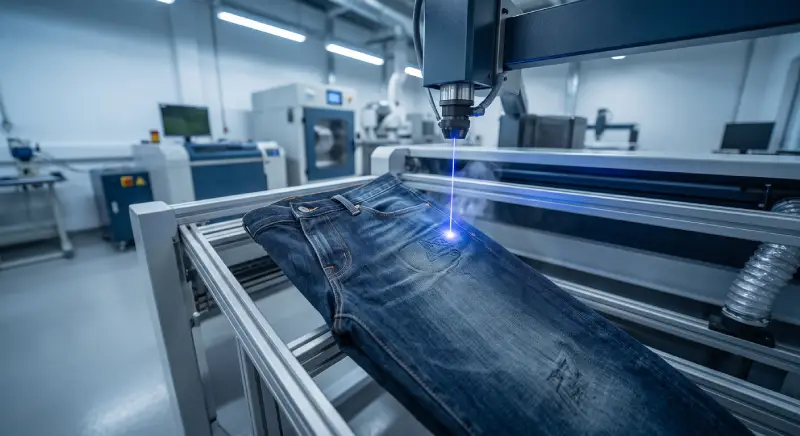
Transparency in the Supply Chain: Tracking Organic Cotton and Recycled Denim Fibers
A manufacturer that is 100% sustainable really controls the distance of their entire raw material pipeline. They ought to keep track of their source of eco-friendly materials transparently. For example, are they using virgin cotton or is it blended with post-consumer recycled denim fibers? Genuine sustainability calls for full traceability from the cotton farm straight to the shipping dock.
| Certification / Technology | Primary Environmental Benefit | Verification Method |
| GOTS Certification | Guarantees organic fiber sourcing and non-toxic processing. | Transaction Certificates (TCs) per batch. |
| Laser / Ozone Finishing | Eliminates toxic chemical washes and drops water use by up to 90%. | Factory equipment inspection/machinery logs. |
| Steam Recovery Systems | Captures waste heat to slash factory energy consumption. | Factory carbon footprint/utility audit reports[cite: 1]. |
4. Hidden Costs of USA Denim Production: Sampling and Washing
[First-Hand Data] Behind-the-Scenes of a USA Denim Production: Sampling and Washing
Bullish and bristling is both a defence mechanism and a compulsion that drives many store owners to leap into local production blindly. Domestic manufacturing, however, operates on very specific financial models. Hidden expenses you need to know about before launching
The True Cost of a Sample: Why Prototyping in the US Can Drain Your Budget
Building a physical model is costly within the United States. At the other end of the scale, local pattern makers and sample sewers also get high hourly rates. As such, a custom denim sample is typically priced between $200 and $500.
If your design goes through half a dozen or more revisions, you could be out thousands before the whole production process even starts! On the other hand, finding a partner like Lianwang Garment reduces this cost. They give you free sample options and credit back the cost of those samples into your invoice once you meet the minimum requirement for bulk order sizes.
Decoding Washing and Distressing Fees: From Raw Denim to Premium Vintage Washes
The basic assembly phase of jeans accounts for only 50% of the cost. Wet and dry processing fees play an important role in how it looks at the end.
· Raw Denim: The cheapest option. The cloth is unwashed, stiff and does not need post-stitched treatment.
· Enzyme Stone Washes: Moderate cost. It softens it up and gives it a somewhat worn-in appearance.
· Premium Vintage Distressing: High cost. This requires scraping, localized chemical spraying and multi-stage baking done by hand.
· The initial cut-and-sew quote seldom includes these treatments. Rather, they are listed as separate line items that can run anywhere from $3.00 to $12.00 each, based on the level of complexity.
OEM vs. ODM Cost Matrix: Balancing Design Ownership with Manufacturing Expenses
When selecting the custom design forms, you have to choose either OEM (Original Equipment Manufacturer) or ODM (Original Design Manufacturer) service models.
OEM (Original Equipment Manufacturer) : You supply the exact tech pack, patterns and fabric specs. The factory only sews and finishes the cutting. This will give you complete ownership over the design, but at a much higher upfront R&D cost.
ODM (Original design manufacturer): the factory supplies existing, tested styles from its own collection. You then personalize items such as the private-label tags, bespoke washes, and brand-specific hardware. It reduces your up-front capital and speeds up your timeline.
Partners such as Kaiping Lianwang Garment Co., LTD fully support both paths. They utilize a smaller, specialized 15+ person R&D team to actually take sophisticated OEM sketches and turn them into reality alongside a nicely-stocked library of pre-optimized ODM silhouettes[1].
5. Solving the Plus-Size Fit Crisis in American Denim
The Deciding Factor Over Denim Brand Loyalty — Fit — The Business of Fashion. But there is a huge problem in the US market : The plus-size fit crisis. All this to say, a lot of independent brands are losing customers because their extended sizes don’t fit well.
The Shrinkage Variable: Managing Stretch Denim (S GENE® Technology) Across Sizes
Advanced stretch fabrics, including Cone Denim’s S GENE® technology, have been widely used in premium denim. The dual-core yarn in this lightweight design offers the greatest amount of stretch, yet yields great rebound. But because they are made of stretch fabrics, this causes unpredictable shrinkage variables in the industrial washing.
That means in a standard Size 28, a fabric might only shrink 3%, but with the same fabric stretched over a Size 40, all bets are off, and that can be up to 6% shrunken. Thus, one needs to conduct separate shrinkage tests for each size tier, which means an expert plus sizes jeans manufacturer must run these tests separately. If they don’t do this step, your stretchy high-waisted baggy jeans will warp and misalign in their first laundry cycle.
Pattern Grading for Inclusivity: Why Standard Grading Fails Curvy Demographics
Traditional pattern grading employs a mathematical formula to uniformly upsize or downsize measurements. Still, human growth is not linear [lines].
[Standard Grading versus Inclusive Pattern Design]
Standard Linear Grading:
Inflates by the exact same percent around the waist, hip, and thigh.
RESULT: Gaping huge at the back waistband, and too small, uncomfortably tight through the crotch.
Inclusive Expert Grading:
Adjusts the exact pitch of the seat coming up.
Widens the thigh circumference proportionally.
Contours waistband to accommodate the natural curves of your body, but maintain structural stability.
To penetrate this high-margin market segment, you need a tailor who specializes in denim fabrics and creating unique fit models of plus-size lines as opposed to just scaling up smaller digital patterns.
6. Checklist: How to Partner with a Reliable Jeans Supplier in USA
Go through this detailed operational checklist before you sign a contract or transfer a deposit via wire. This will come in handy so that your partnered jeans supplier in the USA will run smoothly.
Vetting Factory Reputation and Verifying Previous Bulk Production Samples
· [1] Get Some Examples: The best method is to also ask for long-term case studies or references
· [2] Inspect Bulk Runs – Do not condemn a whole factory based on one hand-made sample. Pick a sample of the order at random, from an order with high throughput in history that also has recent factory-floor output.
· [3] Validate Quality Assurances: Ensure they lead extensive pre-shipment inspections and governmental quality compliance reports.
Negotiating Flexible MOQs (Minimum Order Quantities) for Scalability
· [1] Independent Pricing for Each Tier : Realize how much less your unit manufacturing cost comes down when you scale.
· [2] Safety Profits [Require Low Volume Test Tiers] Ask for a smaller initial order to work with capital in testing new styles.
· [3] Defect Protection System: Have a contract in place to replace those that arrive defective or refund immediately.
Establishing Clear Communication and Realistic Production Timelines
·Verify Communication Response: Partner with those who respect your time; a top supplier should respond within hours to core service requests.
· Create Strict Milestones: Plan 10–20 days for sampling and 25–35 days for bulk production. Agree the material sourcing, cutting, sewing, finishing, and quality-control milestones with the factory, and schedule shipping separately.
· Smooth Door-to-Door Logistics: Ensure the trusted denim producer offers door-to-door shipping advice or freight forwarding assistance so you do not experience customs headaches.
FAQ Section
Q1: What is the common minimum order quantity for private-label denim production?
High MOQ: Domestic US manufacturers often have minimum order quantities of 300, sometimes 500 pcs per style/wash, due to labor setups. On the other hand, lean global partners such as Lianwang Garment provide more flexible startup tiers with short lead times of 25–35 days to expedite brand growth.
Q2: Why are sampling fees much higher than the final bulk unit price?
A single sample takes a master pattern maker and the commitment of a single dedicated sample sewer to set-up machines for one run. This causes a break in the main factory workflow. But the best of factories will refund your sample fees in full as soon as your bulk order hits their minimum volume requirements.
Q3: How do I check that the jeans vendor is really using environment-friendly textile?
Always ask for a proper Transaction Certificate (TC) associated with recognized standards, such as GOTS or OEKO-TEX®. The word is legally meaningless, written on a simple invoice that states “100% organic cotton”.

Recent Comments