
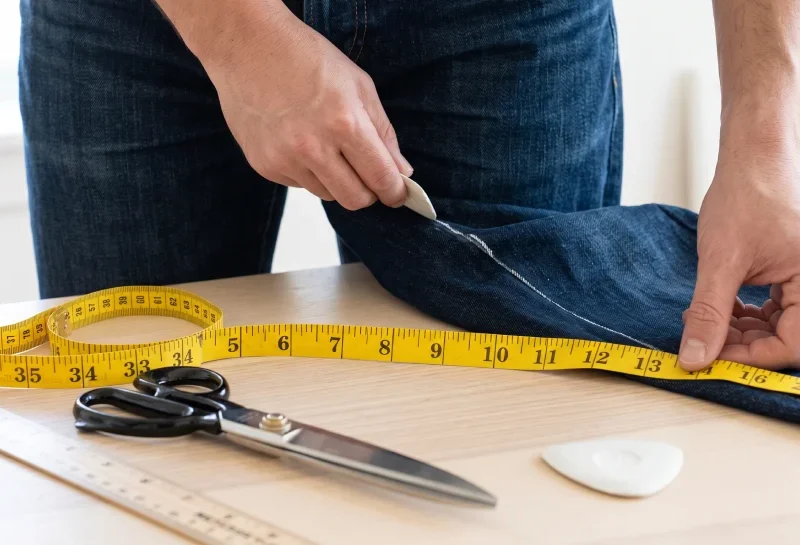
One of the most rewarding projects in sustainable fashion is turning an old pair of jeans into stylish, tailored cutoff shorts. But a lot of amateurs create wonky hems, visible pockets, or ruined fabric due to the fact they skip essential textile fundamentals.
If you desire a vintage, almost torn-apart look or would like something for slowly hand-painting your fabric, knowing the specifics of denim construction will give you success. Sure, there are more complicated DIYs out there — but in our denim-loving hands, this one has been honed to give you years of apparel manufacturing knowledge in one place: a surefire guide to cutting your own luxe cutoffs at home.
Things required before cutting your jeans
The secret difference between a cheap-looking cut and a designer streetwear cutoff lies in prep. Gather the appropriate professional furnishing equipment and examine your fabric makeup carefully before generating a cut.
Essential Tools for Precision Cutting
Do not use scissors of the household paper variety because these are designed to pull and distort heavy indigo weaves. Instead, gather these tailor-grade tools:
- Fabric scissors: You want a pair of sharp, heavy-duty shears to make sure that your cuts are clean and smooth without any frayed seams.
- Tailor’s Chalk or Washable Marker: A marker used to make cutting lines that will disappear.
- Ruler or Measuring tape + The inseam grading tool: Ensures symmetry and accuracy across both legs.
- Safety Pins: Important to be able to pin the hem in quite a few places on the preliminary fitting day.
Pick the right denim blend (the most important part)
Knowledge of fabric is essential to the look that you want. Kaiping Lianwang Garment Co., LTD, urged by twenty years of denim manufacturing standards, consults topographical structures which relate fabric blend type to structural behavior under stress:
- Denim — 100% Cotton: This classic weave is great for a high-waisted vintage look. Cotton fibers naturally fray into thick white horizontal threads, which is useful for heavy denim distressing and pumice stone washing and bleach effects.
- Stretch Denim (Spandex/Elastane Blends): Ideal for Fitted Cutoffs; but be careful not to over-distress the elastane fibers. Elastic threads that are cut or stretched recoil and curl, producing horrible gummy wave shapes along the hem.
Insight from Industry Professionals: Commercially, jean-makers undertake rigorous testing of their fabric to see how different kinds of weaves and tensions react under stress or with the treatment of distressing. Opting for stiff 100% cotton is the key to achieving that real, high-footage vintage feel every time.
Measuring & Cutting a Perfect Cutoff: Step-by-Step
Denim Cutting – Denim is not forgiving; cut too short, you have failed. How to create a flattering shape that suits your body line:
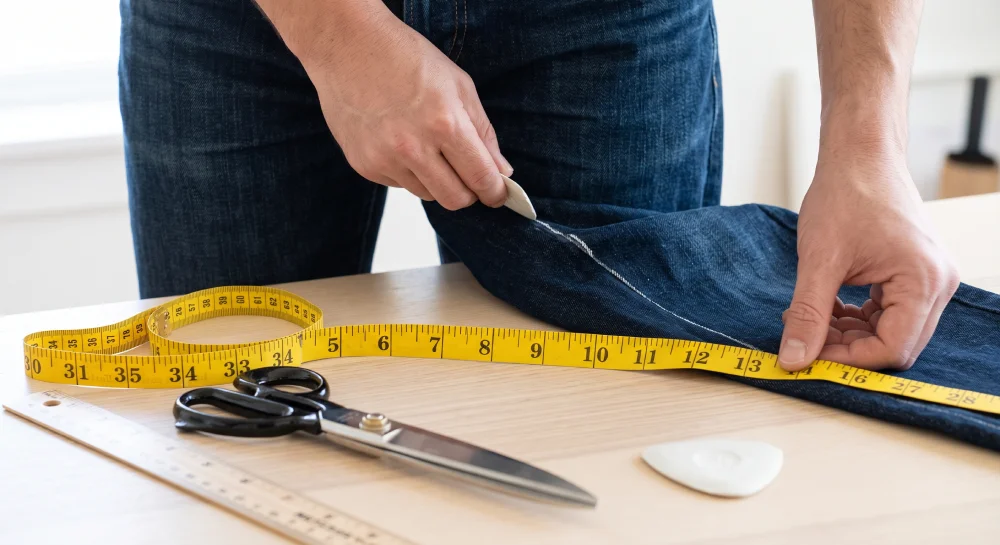
Step 1: Fit test of standing vs sitting
DON’T EVER MEASURE SHORTS FLAT ON A TABLE! Put on your jeans and pull them to your natural waistline, and stand wearing them and chalk the line you want.
Now open: Seat is the key test. Thighs thicken, and shorts sit down; check where the print (leg) lands when sitting. To keep your coverage comfortable, adjust your line down no more than 1/2–1 inch.
Step 2: Determine the gradient of the inseam (Don’t Be Exposed)
Newbies often make the mistake of creating a straight horizontal line through their leg. In the back, a straight cut reveals lower buttocks while uncomfortably bunching in front.
Adherence to the Golden Inseam Gradient Rule:
- Find out how long you want them to be on the inside (for example: 3 inches).
- Tilt your chalk line up towards the outer seam.
- Make a cut 1 inch higher than the inner seam, along the outer seam.
The slight upward rise works wonders for your leg silhouette and stops accidental back flash when we walk.
Step 3: Making the Cut
Lay the jeans flat on a large table. On the top, align the waistband, then push front/ back pocket bags out of the cutoff path.
Using heavy-duty fabric scissors, cut cleanly along your marked line on the first leg. Begin by folding the cut leg over the uncut one, making sure to align the seams at the crotch perfectly, trace along that edge and make your second cut — this will ensure total symmetry.
Styling & Customization Techniques
After your base cutoff, professional tailoring techniques can elevate your denim from DIY to ready-to-wear.
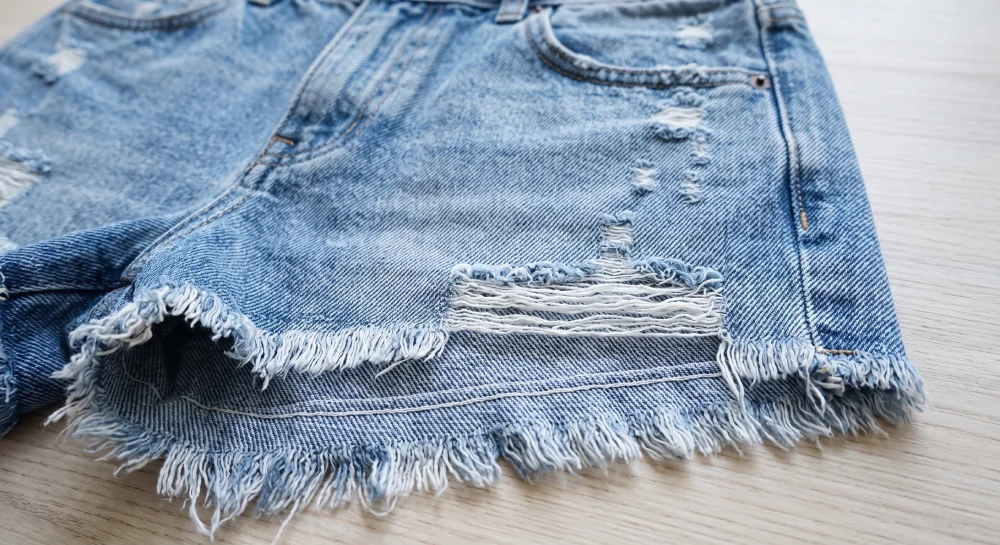
Option A: Natural frayed hems & distressed holes
You either learn denim construction and get an authentic distressed finish. The denim is made of blue vertical warp threads and white horizontal weft threads.
- Tweezer Method: Using sharp tweezers, pluck out the blue threads vertically on the cut edge. This exposes the white horizontal threads that create soft vintage fringe instantly.
- Abrasive Distressing: Run a metal cheese grater—or natural pumice—over pocket edges and hems. It generates a level of discreet concentric abrasion at the stress points.
Option B: Custom Designs By Hand Painting & Dyeing
The addition of a piece of original painted artwork is what makes thigarment singular. Follow these preparation steps for better and longer-lasting results:
- Surface prep: Wipe target denim areas with isopropyl alcohol to REMOVE factory wax and oils.
- Paint Mixing: Combine regular acrylic paint Da Vinci White Acrylic Artist Paint (or similar) with a high-quality sewing paint medium in a 1:1 ratio. Beyond this, the importance of prewashing your denim cannot be overstated; it will ensure that the paint is flexible enough and does not crack when the denim stretches through wear.
- Heat-Setting: Once your painted work is dry, you’ll want to let it all air-dry for 24 hours. Place parchment paper over the artwork, and press with a dry iron on medium heat for 3 to 5 minutes to permanently set pigment for machine washing.
Option C: Bleach splatter & tie dye accents
Bleaching offers high-contrast visual effects. Combine 1 part household bleach with 1 part cold water in a spray bottle.
To create soft spatters, you can flick the spray nozzle over specific areas. Soak the denim right in a cold water bath when the light indigo shade is achieved to halt chemical oxidation and preserve fiber integrity.
How to wash and take care of denim shorts made yourself
Custom cutoffs without proper finishing will just keep unraveling in the laundry until that pocket falls off.
- Step 1: Do a hidden “Stay-Stitch” 0.5 inches above the hemline.
- Step 2: Turn your shorts inside out prior to washing.
- Step 3: Gently wash with cold water.
- Step 4: Air Dry Away From the Sunlight.
The “Stay-Stitch” Trick
All of this endless fraying can be prevented by running a hidden straight stitch (on a sewing machine or even with a hand needle) 0.5 inches above the raw cut hem. Normally, that thread is locked down over the hem to anchor it and hold it securely in place (that is how hems are finished), but this thread barrier lets the below-hem fringe out while keeping the main garment structure intact.
First Wash Instructions
This is the first time you will be washing your custom hand-painted art and bleached accents — so ensure they stay safe:
- Always turn your shorts inside out.
- Wash with a mild detergent (not bleach) in cold water.
- Lay flat or hang to air dry away from direct hot sunlight to prevent shrinkage and color distortion.
Industrial Quality vs. Home DIY
Although DIY options are great for artistic freedom, boutique brands and online sellers need bulk quality, appropriate fit grading (e.g., mass or commercial production), and scalable processes.
| Distressing Type | Hand / Tweezer | Laser / Wash Sustainable |
|---|---|---|
| Stitching Durability | Hand or Standard Machine | Heavy 330+ Equipments |
| Assignment Time | 2 to 4-hour per pair | 10–20-day dispatch samples |
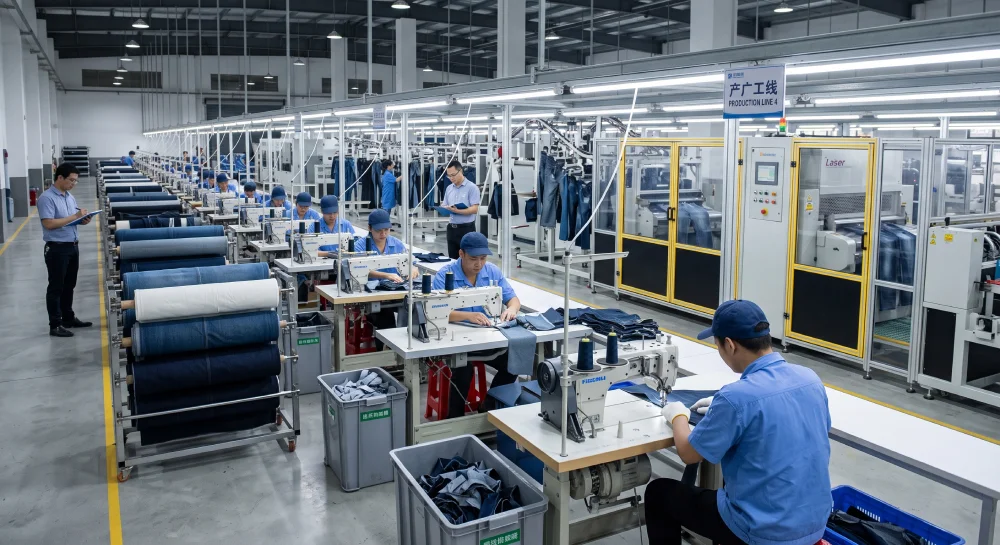
Working with a proven apparel manufacturer will also mean top-grade quality control when scaling your fashion brand. Example: Kaiping Lianwang Garment Co., LIMITED offers extraordinary technical abilities in denim manufacturing:
- Manufactured for over 20+ Years: Specialized expert craftsmanship across women’s, men’s and kids’ denim verticals.
- Infrastructure: Operates a 7,000+ square meters premises with 330 units of garment machinery and 10 production lines.
- Robust R&D and Customization: 15+ people in the R&D team offer one-stop OEM/ODM, supporting custom washing, fabric selection, and customer logo printing within 10–20 days of sample development.
- Quick Response & Fast Turnaround: Immediate enquiry response in 30min, General quote in 3 hours, Specific quotation in 8hrs, and production cycles guaranteed within 25–35 days.
- Production with Reduced Environmental Impact: Energy-saving lighting and boiler steam exhaust recovery systems supporting eco-friendly manufacturing.
Frequently Asked Questions (FAQ)
Can you make denim shorts without sewing them?
Yes, absolutely! Leave raw cut hems unfinished for a tousled vintage fringe. If you don’t want the hem to unravel, put a thin line of washable fabric glue (or liquid seam sealant) along the edge of the hem.
Why do my denim shorts ride up between my thighs?
Riding up typically occurs when the inseam is cut too short or with high-stretch fabric. To avoid this, maintain a minimum inner inseam of 3 inches and stick to rigid cotton fabrics instead of lighter stretch blends.
What is the best paint to use on denim cutoffs?
For fabrics, acrylic paint mixed only with a medium devoted to fabric in the proportion of 1:1 is best. In this way, the fabric is stuck to your denim fibers and is sure to stretch and not fade even after machine washing.
Whether it’s vintage cutoffs that you’ve customized for yourself or custom apparel you are looking to manufacture for online sale, learning the ins and outs of denim apparel ensures a perfect job every time.

Recent Comments