
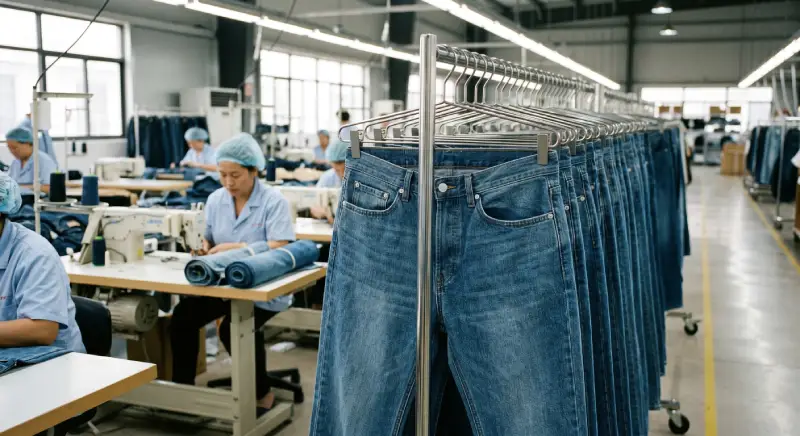
The denim market is growing faster than ever globally, and launching a successful denim brand means more than amazing designs. It requires an experienced and trusted manufacturer who can consider quality, time and efficiency. For most independent brands and some e-commerce platforms, collaborating with a white-label denim jeans manufacturer is the fastest route to market.
In this guide, you will find everything you need to know about white-label denim sourcing presented in an easy-to-understand format. In this guide, we will investigate those hidden dangers, review the benefits of direct-factory partnerships and detail the precise production process to safely scale your brand.
What is a White Label Denim Jeans Manufacturer?
The Definition of White Label Denim Sourcing
White label denim sourcing is where a factory manufactures 100% already made, non-branded jeans based on tested and tried fitted designs. As a result, these products can simply be branded by the buyer with their own logos, main labels, hangtags and custom hardware. It saves brands from having to go through the long and costly pattern-making stage, greatly reducing the time taken to launch a new collection.
White Label vs Private Label: Which Jeans Fit Your Brand?
It is also important to note that while these terms are often used interchangeably, they are actually two very different manufacturing strategies:
- White Label (ODMs): This is where a manufacturer designs and perfects that garment. Just pick a base fit, then wash and brand it. It’s energy-efficient and features lower initial costs.
- Private Label (OEM/ODM): You are providing a precise tech pack, custom measurements and proprietary fabric specifications. These factories construct the entire garment from the ground up based solely on your custom blueprints.
Deciding between the two of them depends on your budget and design skill set. If speed and flexibility are concerns, white-label sourcing is a great solution for brands that wish to validate market trends quickly without major investment in R&D.
Top 3 Hidden Dangers in White Label Denim Production (And How to Avoid Them)
More posts from the THE DENIM SHRINKAGE TRAP series: Preventing Colour Fading, The Denim Shrinkage Trap: The Return of the Boring PostCutting down to the right fit
Denim is a living fabric. 100% cotton because it will shrink significantly through industrial washing. A raw denim fabric, then, might shrink between 3% and 8% on washing. If a factory doesn’t get its shrinkage rate right before it goes to cutting and sewing your M-size jeans, you can end up with M jeans that have shrunk down to an S.
What to do about it: Make sure your supplier has a professional R&D department that performs specific shrinkage tests for every batch of fabrics before the cutting process takes off.
Fabric Weight Difference: Select Proper Quality Fabric for Your Market (10oz to 14oz)
Fabric weight is expressed in ounces (oz) per square yard, and mismatching this detail can turn your audience off.
- 10oz – 11oz: lightweight denim suitable for summer collections or stretch-fit women’s jeans
- 12oz – 13oz: Medium-weight denim typical for classic companies, men’s and women’s straight fit Jeans
- 14oz+: Very heavy-weight denim — this type is mostly used by heritage and premium streetwear brands that value structural tenacity and strength.
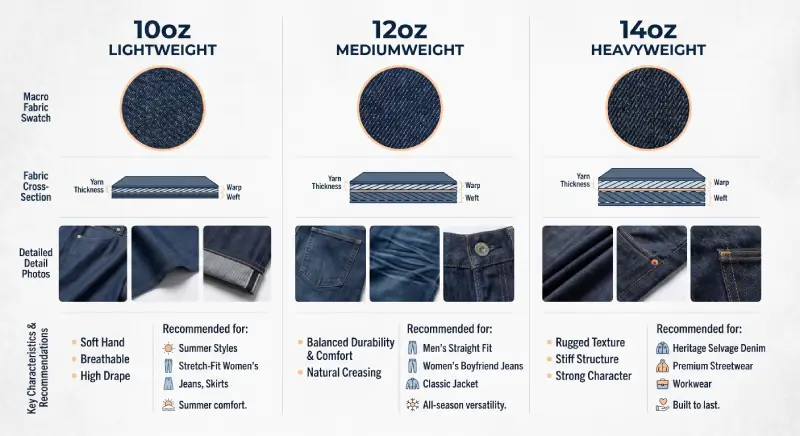
Imagine your supplier shipping a lightweight 10oz fabric when it was expecting a heavy structured 14oz fabric in its market. Simply, this one point could lead to the lowering of perceived value in the brand. Thus, you should always ask for the exact specification of the fabric in written form before production.
Reduce Production Cycles To Cut Down On Time To Market
With a sense of urgency, here we go: In the rapid-fire world of e-commerce, time is your enemy. Unlike the 90-day period for delivering traditional supply chains, agile factories optimize their workflow to go much more quickly. Take Lianwang Garment, for example. They promise to reply to an inquiry within 30 minutes, a detailed quotation within 3 hours and an astonishing bulk lead time of only 25–35 days. This allows your brand to instantly restock best-selling merchandise.
Critical Customization Options for Your White Label Denim Line
Just cause this is white-label manufacturing does not mean your products have to appear generic. An expert factory gives optimum variation in each step of the outfit.
Hardware and Trims: Custom Buttons, Rivets, and Leather Patches
The jeans are the punctuation mark of a hardware pair. You can fully customize:
- Buttons and rivets: Choose from gunmetal, antique brass or matte black variations. All engraved with your logo.
- Leather Tags: Choose from real leather, suede or eco-friendly vegan corn-based leather for the back waistband to best suit your brand image.
Latest in Sustainable Washes: Laser Distressing and Water-Saving Ozone Washing
Large volumes of water and caustic substances are still used in conventional denim washing. At present, the top manufacturers are adopting green initiatives. Advanced methods include:
- Laser Distressing: Replaces manual scraping, creating precise and easily repeatable rips and fades without degrading fabric strength.
- Ozone Washing: It uses natural ozone gas to bleach denim, resulting in a reduction of water consumption and chemical waste.
Labelling and Packaging: Main Labels, Hangtags and Eco-Poly Bags
Your manufacturer can design every aspect of packaging differently to guarantee a first-class unboxing experience. This is everything from woven main labels to thick recycled paper hangtags and biodegradable eco-poly bags. In fact, your clothes are prepped and on-brand right out of the box.
Step-by-Step Production Process with a White Label Jeans Supplier
Collaboration with an established manufacturer simplifies the intricate process of transforming a design into a product.
[Step 1: Tech Pack & Fit] ➔ [Step 2: Sample & Shrink Test] ➔ [Step 3: Cutting & Sewing]
│
[Finished Goods Delivered] ◄ [Step 5: Branding & Logistics] ◄ [Step 4: Washing & 50-Point QC]
Step 1: Choose Your Base Fits + Submit Your Brand Tech Pack
To begin with, you take a look at the factory’s mould bank of successful silhouettes, such as high-waisted wide-leg, slim fit or relaxed cargo. You pick the base fits, then send over your brand assets, logo files and where each trim should be placed to the dev team.
Step 2: Creating and testing wash shrinkage samples
After that, the R&D department of the factory will help you realize your vision. Underpinned by the expertise of a tactile, responsive team and an R&D department with 15+ pro experience, manufacturers like Lianwang can finish sample development in just 10–20 days. Samples go through this phase, where they are required to be wash-tested so that fabric shrinkage is at a minimum and the fit is exact.
Step 3: Automated bulk cut and heavy-duty denim sewing in 3 easy steps
After your approval of the sample, we will start bulk production. They use automated cutting machinery to spread and cut heavy denim fabrics. Then the panels are sewn together on dedicated production lines by skilled operators using high-tensile threads and some good old-fashioned chain-stitching with bartack reinforcement.
Step 4: Factory wash and finish up, Round after round, 50-point QC check
Once sewn, the raw pieces are returned to the laundry site for the requested wash, ranging from a light vintage rinse to a deep stone wash. After the wash, an intensive quality check is performed on the jeans. Fully inspect each and every piece before shipping for loose threads, ensure measurements are up to par, and most importantly getting great quality workmanship.
Step 5: Customized Branding Implementation and Worldwide Logistics Aid
In the last step, workers glue your bespoke hangtags on, main labels, as well as leather patches. The completed jeans are folded into eco-poly bags and packed into master cartons. Leading manufacturers offer seamless, door-to-door global logistics guidance to clear customs without a hitch and get your shipment successfully to the warehouse.
White Label Denim Sourcing FAQ
Compliance costs are among the reasons that industry averages for custom denim often sit much higher; upwards of 500 pieces per style—but more flexible OEM/ODM factories can have lower minimums and ultimately help brands test new markets. In addition, many suppliers during the development stage offer free samples, 100% refund of the sample cost after your bulk order reaches a certain quantity.
And premium denim, as indicated by its yarn uniformity, dye depth and structural recovery. Quality denim can hold its shape through many wears. Provide a national quality requirement test report and material certificate from the supplier before your order ships to prevent damage to your brand.
Absolutely. Modern Manufacturers care about conserving energy and resources. Denim made of organic cotton, Better Cotton Initiative (BCI) cotton or pre-consumer recycled cotton can be sourced. Additionally, choose factories that embrace innovative green technologies —such as energy-efficient lighting and systems for recovering steam exhaust from boilers— in an effort to reduce the total carbon footprint of your brand.

Recent Comments