
Private Label vs Custom Denim: Sourcing Guide for Brands
Launching a denim brand is thrilling—honestly, it’s one of the most exciting moves you can make in fashion e-commerce. But let’s be real: it’s also a technical minefield. The choice between private label and fully custom manufacturing isn’t just a checkbox; it dictates your profit margins, how much cash you’ll have tied up in inventory, and how fast you can actually get your jeans into customers’ hands.
Take a player like Kaiping Lianwang Garment Co., LTD, for instance. They’ve been around for over 20 years, run more than ten production lines, and churn out upwards of 600,000 pieces annually. They handle both OEM and ODM models. But understanding the nitty-gritty of each path—that’s what separates brands that scale smoothly from those that stumble out the gate. So let’s break it down in plain English.
1. Demystifying Denim Sourcing: Private Label vs. Fully Custom Manufacturing
What Is Private Label Jeans Manufacturing (ODM / Ready-Pattern)?
Think of private label denim as the “fast-track” option. It operates under the ODM (Original Design Manufacturer) setup. Essentially, the factory hands you a menu of pre-developed silhouettes, fit blocks they’ve already perfected, and fabrics they’ve already sourced. You’re not reinventing the wheel—you’re just picking your favorite model and giving it your own paint job.
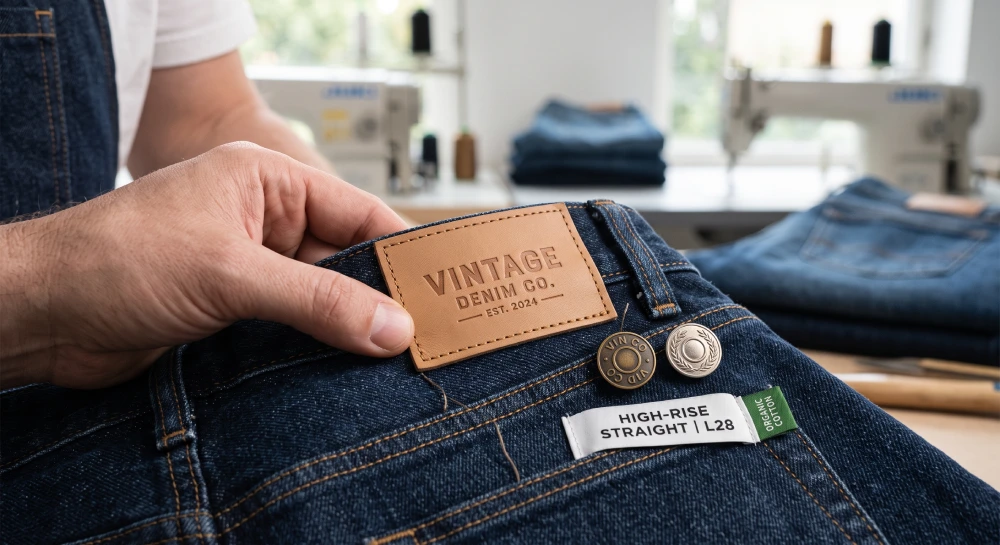
Here’s what that looks like in practice:
- You browse their catalog—high-rise straight, wide-leg, slim-tapered, whatever’s trending.
- Want to tweak the inseam, change the hem finish, or shift the pocket placement? Sure, minor adjustments are usually on the table.
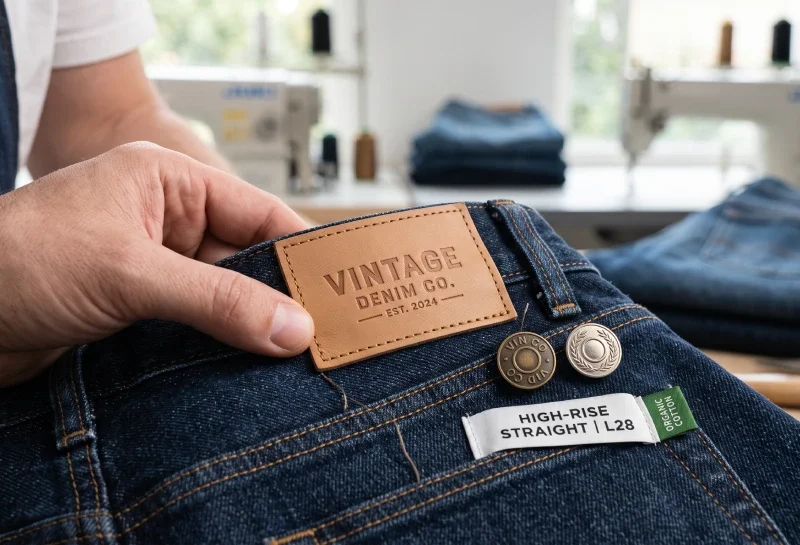
- Then comes the fun part: slapping on your custom leather patches, woven labels, engraved buttons, and hangtags. It’s your brand, but built on a foundation the factory already knows works.
And because they’ve done it a thousand times before, seasoned shops with a solid R&D team—say, 15+ pros—can whip up a sample in about 10–20 days. That’s lightning speed in denim world.
What Is Fully Custom Denim Production (OEM / Made-to-Order)?
Now, fully custom—or OEM (Original Equipment Manufacturer)—is a whole different beast. This is where you’re the architect, and the factory is your builder. You control everything from the ground up.
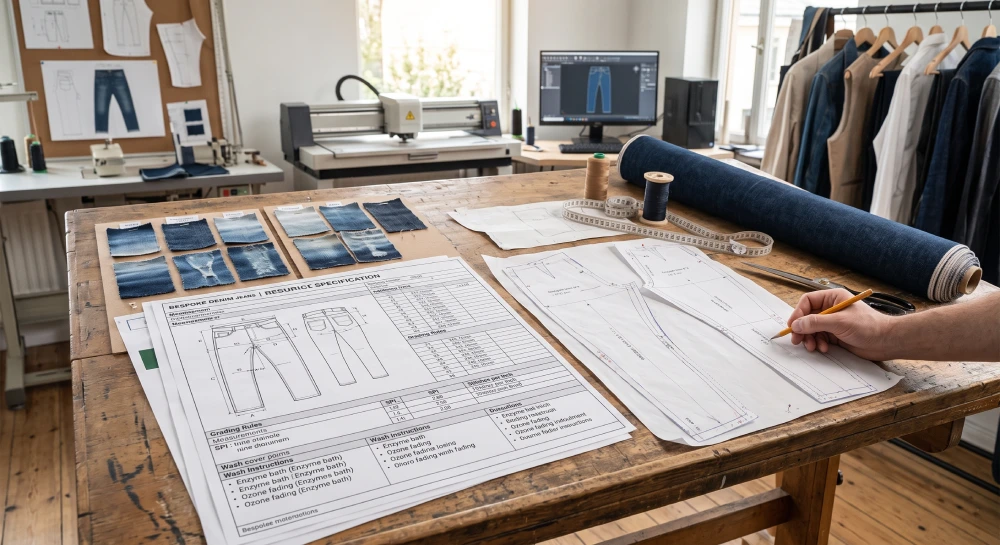
- You hand over a tech pack with your own measurements, stitch counts (SPI), and grading rules.
- Want a droopy drop-crotch or an ergonomic curved-leg that nobody’s ever seen before? You design it, and they engineer it via CAD and paper patterns.
- You also get to play fabric sourcer: specify rigid raw selvedge, organic cotton blends, or high-tech dual-core stretch fabrics.
- And the washes? Totally yours. Enzyme baths, ozone fading, PP spray, localized abrasions—you name it, you develop the recipe.
It’s the full monty. But as you might guess, all that control comes with a price—in time, money, and patience.
Private Label vs. White Label vs. Custom: Clarifying Common Sourcing Terminology
I’ve noticed a lot of founders mix these up, so let’s clear the air once and for all:
- White Label: These are completely unbranded, plain-vanilla stock jeans. You buy them off the shelf, slap your tag on, and that’s it. Zero factory-level changes.
- Private Label (ODM): The factory’s own patterns, but finished with your branded trims, custom labels, and unique packaging. It’s your look, but built on their bones.
- Custom Denim (OEM): Fully bespoke. Your patterns, your fabric, your wash, your rules. The end product is 100% yours—and so is the intellectual property.
2. Head-to-Head Comparison: 6 Critical Decision Metrics
Let’s get down to brass tacks. Here’s a side-by-side snapshot of how these two models stack up:
| Metric | Private Label (ODM) | Fully Custom Denim (OEM) |
|---|---|---|
| Minimum Order Quantity at Lianwang Garment | MOQ 50pcs per style | MOQ 50pcs per wash |
| Production Lead Time | 25–35 days | 25–35 days |
| Sampling Time | Within 10–20 days | 10–20 days |
| Tech Pack Requirement | Basic spec sheet / Logo files | Detailed, multi-page pack |
| Upfront Capital Entry | $3,000 – $8,000 | $15,000 – $35,000+ |
| Fit IP Ownership | Factory-owned | Brand-owned |
Minimum Order Quantity (MOQ) and Inventory Commitment
At Lianwang Garment, both private label (ODM) and fully custom denim (OEM) are available with MOQ 50pcs: per style for private label and per wash variation for fully custom denim. This is our garment-order policy; other manufacturers and upstream material suppliers may set different minimums. Fabric selection, pattern development and wash processes affect pricing and lead time, so confirm these production details before placing your order.
Lead Times & Speed to Market: Sampling to Bulk Delivery
At Lianwang Garment, standard sampling takes 10–20 days and bulk production takes 25–35 days for both ODM and OEM orders. Confirm the schedule against your approved specifications, materials, and sample sign-off. Custom yarns, fabrics, and additional fit rounds may require separate development time; agree these milestones before production.
Upfront Capital Investment and Hidden Costs
Private label is relatively light on the wallet. You pay for the jeans and your branding, but there are few extra fees. Custom denim, though, comes with a laundry list of setup costs: pattern grading, tech pack engineering, lab dips, and metal mold tooling (those can run $80 to $200 per mold). It adds up fast.
Fit, Wash, and Aesthetic Differentiation
Private label blanks are great for commercial, on-trend styles. But if your brand’s whole identity hinges on, say, a 16oz Japanese Kurabo selvedge with heavy 3D whiskering, you have to go custom. No way around it. You can’t fake that level of distinction with stock blocks.
Intellectual Property & Tech Pack Ownership
Here’s a nuance many overlook: with private label, the pattern belongs to the factory. So if another brand comes along and orders the same fit, they’ll get essentially the same jeans—just with different labels. With custom, your tech pack and fit gradings are yours exclusively. That’s a huge deal if you plan to build a lasting brand identity.
3. The Unspoken Realities: What Most Denim Sourcing Guides Don’t Tell You
The Wash & Shrinkage Challenge: Why Custom Denim Sampling Takes 3+ Rounds
Let me tell you something they don’t put in glossy sourcing brochures: denim has a mind of its own. Unlike cotton jersey, which behaves predictably, denim twill can shrink anywhere from 3% to 12% during heavy stonewashing, acid washes, or bleaching. The warp and weft fibers contract at different rates, and it’s not always pretty.
I once worked with a streetwear startup that wanted an aggressive vintage bleach look. Their first sample came back with inseams that looked like they’d been through a dryer on high heat—twisted and distorted. The fix? You have to cut the initial patterns oversized to anticipate shrinkage, then test, wash, measure, and repeat. That’s why custom development routinely takes 3 to 4 sampling rounds before the measurements stabilize. It’s frustrating, but it’s also the price of uniqueness.
Custom Hardware & Trims: The Hidden Minimums Behind Branded Buttons & Rivets
Here’s another gotcha: even if the factory agrees to produce 100 jeans, the subcontractors who make your custom buttons and rivets usually have their own MOQs—often 1,000 to 5,000 sets. So what do smart brands do? They order 2,000 to 5,000 sets upfront, store the surplus with their factory, and draw from that inventory for future collections. It’s a bit of a cash outlay initially, but it saves headaches later.
Sustainability & Compliance Verification
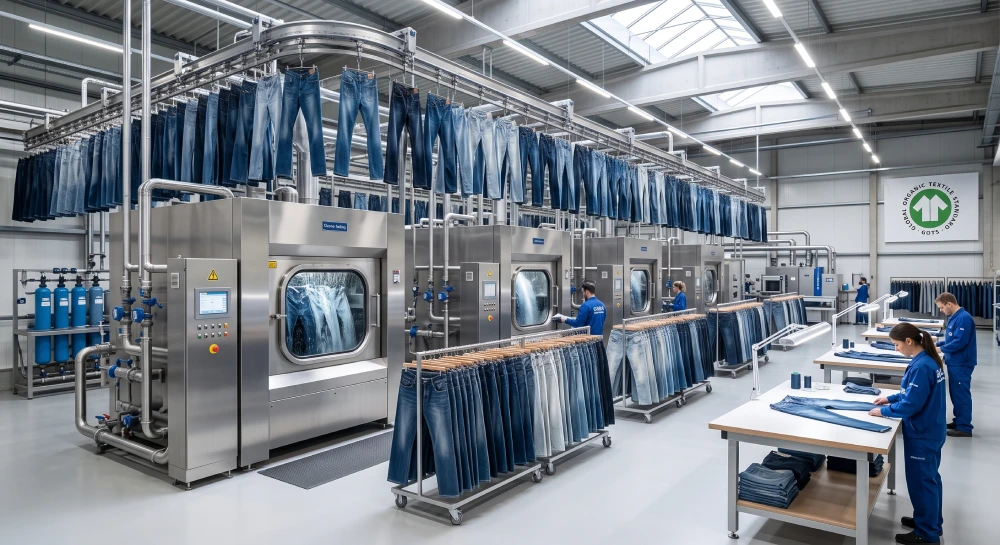
These days, your customers care about more than just fit and fabric—they want to know your jeans aren’t destroying the planet. That’s why I always tell brands to audit a factory’s environmental practices. Facilities like Kaiping Lianwang, for example, have installed boiler steam exhaust recovery systems and energy-saving lighting to cut down on power usage. And before you greenlight mass production, make sure the wet-processing mill uses closed-loop water treatment and holds proper compliance certificates. It’s not just good ethics—it’s good branding.
4. Which Denim Sourcing Model Fits Your Brand? (Decision Framework)
text
                        [Brand Sourcing Inception]
                                    |
                 +------------------+------------------+
                 |                                     |
      [Capital < $10,000 & Launch < 60 Days?]   [Capital > $20,000 & Proprietary Fit Essential?]
                 |                                     |
                 v                                     v
        [Private Label / ODM]                 [Full Custom / OEM]
                 |                                     |
                 +------------------+------------------+
                                    |
                                    v
                        [The Hybrid Strategy]
                  (Core Staples: Private Label)
                  (Hero Grails: Bespoke OEM)
Choose Private Label Jeans If:
- You’re an e-commerce startup, a digital boutique, or a creator testing the waters with $3,000 to $8,000 in pocket.
- You can plan for 10–20 days of sampling followed by 25–35 days of bulk production, and you’re okay with proven, timeless fits (think classic mom jeans, slim stretch, standard high-waist).
- You’re still validating product-market fit and don’t want to bet the farm on a single silhouette.
Choose Fully Custom Denim If:
- You’re running a high-end designer label where non-standard silhouettes, custom selvedge IDs, and proprietary distressing are part of your pricing power.
- You already have a loyal audience, a track record of sales, and a dedicated design team that can produce detailed tech packs.
- You’re ready to invest serious capital—both financial and emotional—into creating something truly original.
The Hybrid Playbook: How Smart Brands Scale
Here’s a secret most successful DTC labels won’t admit outright: they rarely stick to one model. The savvy ones use a hybrid approach.
- Staples: They source everyday styles—like black skinny jeans or clean raw indigo straight-legs—via fast-turnaround private label lines. These are your bread-and-butter, the reliable revenue generators.
- Hero Grails: They set aside R&D budget to develop fully custom signature pieces—maybe a heavyweight distressed carpenter jean with proprietary paneling. These are the showstoppers, the items that build buzz and justify premium pricing.
It’s the best of both worlds, and it’s how you scale without losing your soul.
5. Step-by-Step Vetting Checklist for Denim Manufacturers
5 Critical Questions to Ask Suppliers Before Sending a Deposit
Before you wire any money, grill your potential partner with these questions:
- Capacity & Infrastructure: What’s your factory footprint and machinery setup? A top-tier partner should have something like 7,000+ square meters, 150+ production staff, and a dedicated sample department.
- Communication SLAs: How fast do you respond? Professionals reply within 30 minutes and provide quotes within 3 hours. If they’re ghosting you now, imagine what happens when things go wrong.
- Turnaround Window: What’s your exact lead time from PO sign-off? For agile ODM lines, you should expect 25–35 days. Confirm material readiness, sample approval, and shipping time when planning your launch.
- Quality Assurance Procedures: Do you perform full pre-shipment inspections? Reputable factories will check every single piece before it leaves the dock.
- Defect Resolution Terms: What’s your compensation policy for damaged goods? Clear terms—like replacing defective items at no cost—are non-negotiable.
Red Flags in Denim Tech Packs and Initial Fit Samples
When you get your first samples, keep an eye out for these warning signs:
- Waviness along the fly placket: This usually means uneven tension between the zipper tape and denim twill. Not a good sign.
- Twisted leg seams (torque): Happens when patterns are cut off-grain relative to the raw denim roll tension. It makes the jeans look cheap and slouchy.
- Unbalanced pocket placement: Back pockets that sit unevenly across the yoke line? That’s due to improper fabric stabilization during washing—and it’s a pain to fix later.
If you see any of these, push back hard. They’re fixable, but only if you catch them early.
FAQ: Private Label & Custom Jeans Sourcing
What is the typical cost difference per unit between private label and custom jeans?
Private label usually runs $9 to $18 per pair at lower order quantities, since the factory uses in-stock fabrics. Custom jeans? Expect $16 to $35+ per pair for initial runs, thanks to pattern development fees, custom dye lot minimums, and manual distressing labor. It’s a noticeable jump, but you’re paying for exclusivity.
Can I supply my own denim fabric to a private label manufacturer?
Absolutely—that’s called CMT (Cut, Make, Trim). But honestly, most reputable factories have strong relationships with textile mills and can recommend fashionable fabrics that are often cheaper and more reliable than what you’d source on your own. Unless you have a very specific fabric in mind, I’d lean on their expertise.
How can small brands get customized hardware without ordering 10,000 pieces?
You can negotiate a run of 1,000 to 2,000 sets and pay a mold setup charge (around $80 to $200). Then, ask the factory to store your surplus hardware for future orders. It’s a common practice, and it keeps your costs manageable.
Do I need a professional tech pack for private label denim?
Nope. For private label, just send high-res logo artwork, label placement guides, packaging instructions, and your preferred wash selections. The factory provides the patterns and grading specs. It’s one of the reasons private label is so beginner-friendly.
There you have it—a no-BS look at the private label vs. custom denim decision. Whichever path you choose, go in with your eyes wide open, ask the tough questions, and don’t be afraid to mix and match as you grow. Good luck—and may your seams stay straight and your washes stay consistent.

Recent Comments