
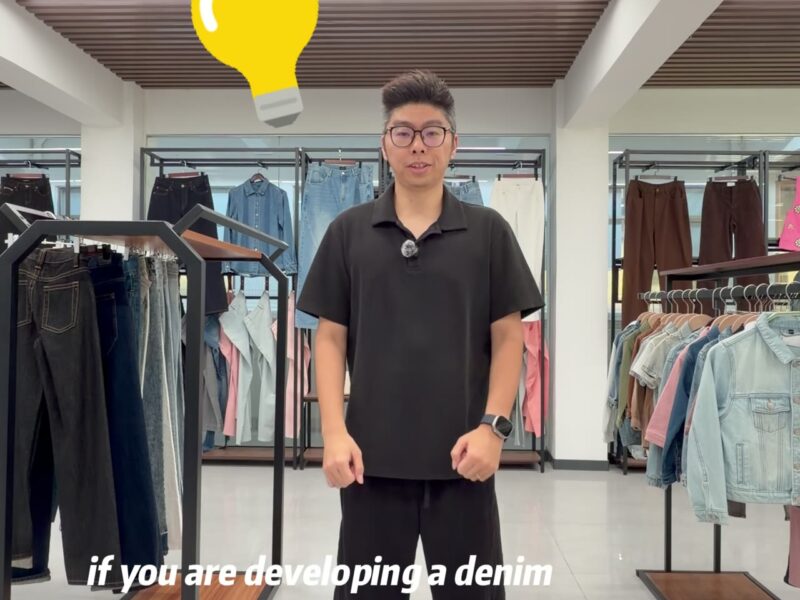
Brands looking for a denim look do not always have to create that appearance through a conventional denim wash process. In the sample shown here, the denim effects are digitally printed onto white twill fabric. The visual treatment—including the fading, whisker marks, texture, distressed details and decorative artwork—is created by the print design.
This gives buyers another route to explore when developing a denim-inspired garment. It is especially relevant when a collection calls for a particular surface design or custom artwork. The sample in this article is a development example; the final result should be reviewed and approved against each brand’s own design and product requirements.
What are digitally printed denim garments?
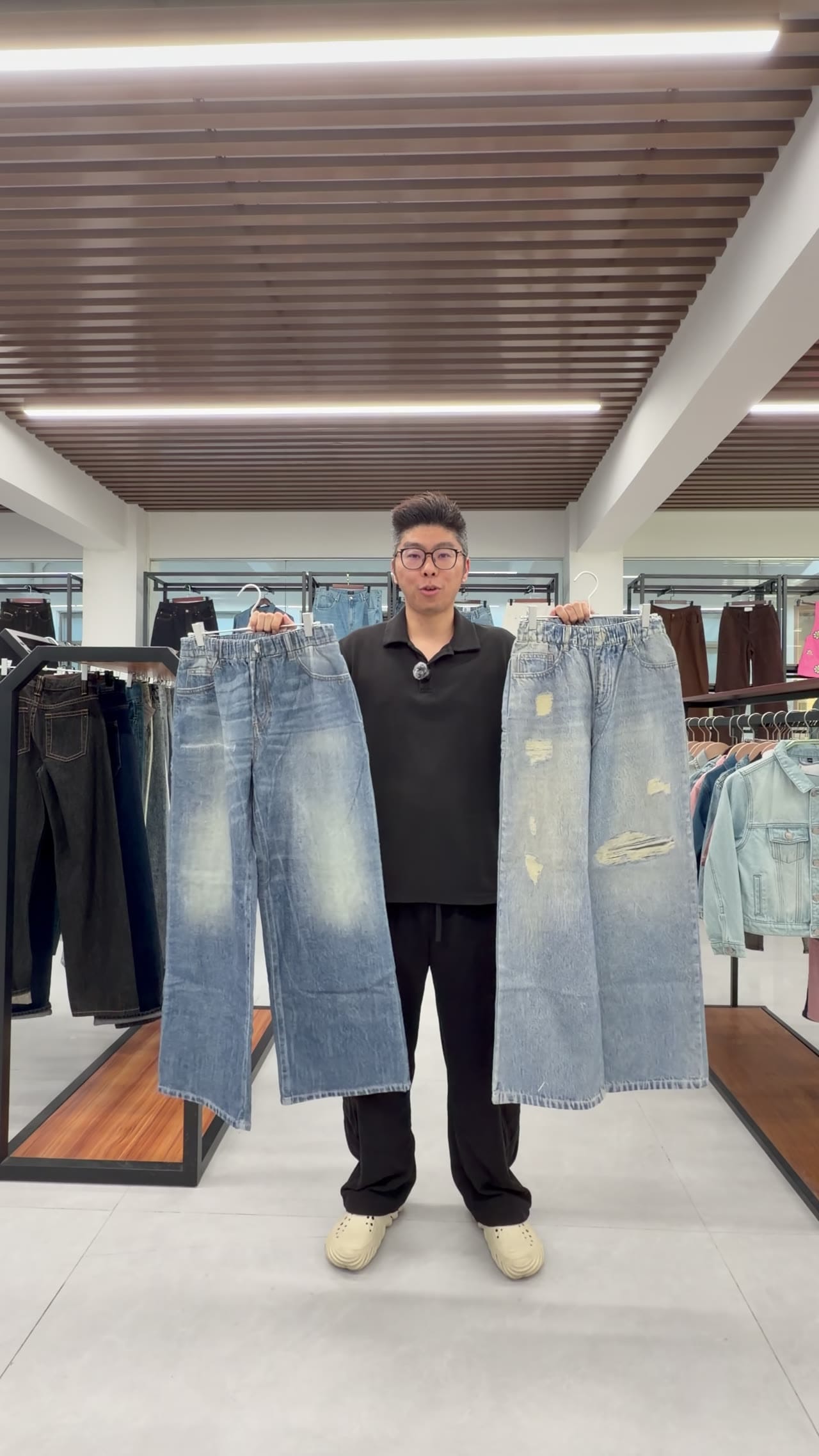
For this product, the base material is white twill fabric. A digital printing process applies the denim appearance to that fabric. The sample is therefore different from a garment made from conventional indigo-dyed denim: the denim look is printed onto the twill rather than created through the usual denim dye and garment-wash route.
The term “digitally printed denim garments” describes the product’s intended appearance and category. When reviewing a development sample, buyers should still confirm the actual base fabric, print process and construction details in the product specification. This keeps the visual concept clear without confusing printed twill with conventional denim fabric.
How is the denim effect created?
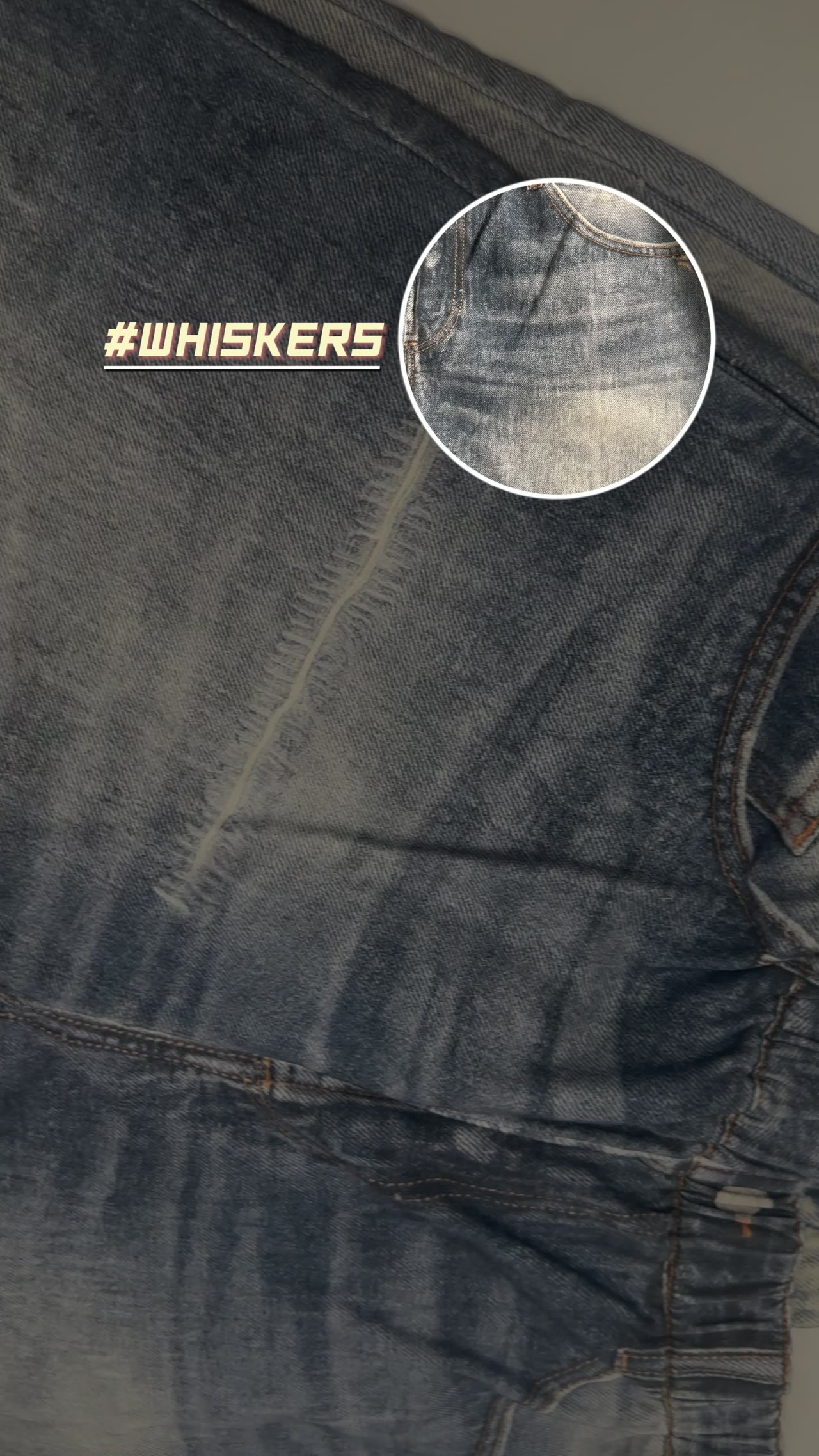
In the sample shown, the denim visual effect is printed directly onto the white twill. The garment does not go through a denim washing process to create that appearance. The artwork can include visual details such as fading, whiskers, texture and distressed areas, as well as custom graphic elements.
This is a process description for the sample presented here, not a claim that every printed denim-look product follows the same method. The exact production route should be confirmed for each design and order. Buyers should also ask the supplier which parts of the garment are printed and which parts—such as seams, trims, labels or other components—use separate materials or processes.
Design possibilities for a custom collection
One reason to consider digital printing is the opportunity to develop a surface design around a brand’s own artwork. A buyer can discuss a reference image, placement or graphic direction with the supplier and review how that idea translates onto the garment.
The video sample shows more than one visual direction. These include light and dark denim appearances, fading, whisker lines, distressed-looking marks and colorful decorative artwork. They are examples of what is visible in the samples, not a guarantee that every effect will look identical on every fabric, color or garment shape.
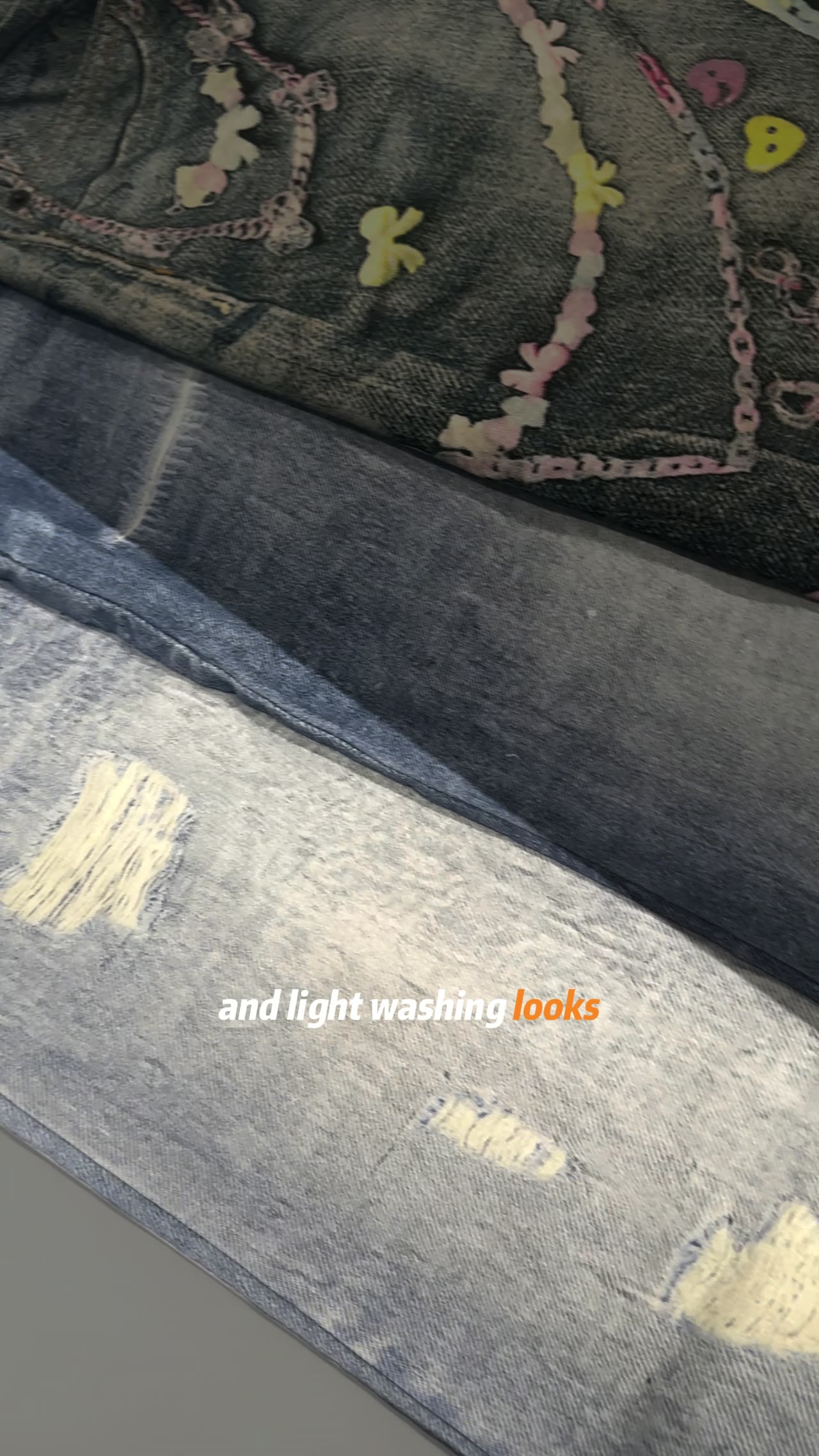
For a new design, the buyer should share the artwork and clarify what matters most: the overall color balance, the location of each detail, the scale of the graphic, or the relationship between the print and garment panels. These details help the development team prepare a sample for review. The sample should be checked as a complete garment, because print placement across seams and panels can affect how the design reads when worn.
What should buyers evaluate in a sample?
Before moving from a concept to an order, buyers can use a sample review to answer practical questions:
1. Does the printed look match the approved design?
Compare the sample with the supplied artwork or reference. Check the main colors, fading pattern, whisker placement, distressed areas and decorative details. If a detail is important, identify its position clearly in the comments or on an annotated design file.
2. Does the artwork work on the garment shape?
Review the front, back and side views. Check how the print aligns across garment panels, pockets, seams and hems. A graphic that looks clear on a flat image may need adjustment when placed on a three-dimensional garment.
3. Is the base material suitable for the product?
The sample described here uses white twill as the base. Buyers should confirm the fabric composition, weight, hand feel and other required specifications with the supplier. These properties are not established by the screenshots alone and should be documented in the product development information.
4. What performance checks are required?
Agree on the checks that matter for the intended end use before approval. For example, the buyer and supplier can discuss what print appearance should be reviewed after the care or wear tests required for the product. The applicable test method and acceptance criteria should be set for the project; no test result is claimed for the sample shown in this article.
5. Is the sample information complete?
Keep the approved artwork, sample comments, fabric details and version information together. Confirm which sample is approved and whether the approval covers only appearance or also other product requirements. Clear records help the brand and supplier refer to the same design during later development.
Does this mean lower environmental impact?
The sample shown does not use a denim washing process to create its denim appearance. That process detail alone does not establish the product’s overall environmental impact. No water, energy, chemical-use or lifecycle comparison has been provided for this sample, so buyers should request relevant supporting information before making environmental claims.
How to start development
To discuss a digitally printed denim garment, send the supplier your design or reference images, the garment type, the target quantity and the details that matter most in the finished look. Include any required fabric specifications and the checks your team expects during sample review.
The confirmed minimum order quantity for this product is 50 pieces. Buyers should include their target quantity when requesting a development discussion so the supplier can confirm the requirements for the proposed design.
If you are developing a denim collection, send us your design to discuss a digitally printed denim garment. Share the garment type, artwork, target quantity and key sample requirements so we can review the next development step together.

Recent Comments